

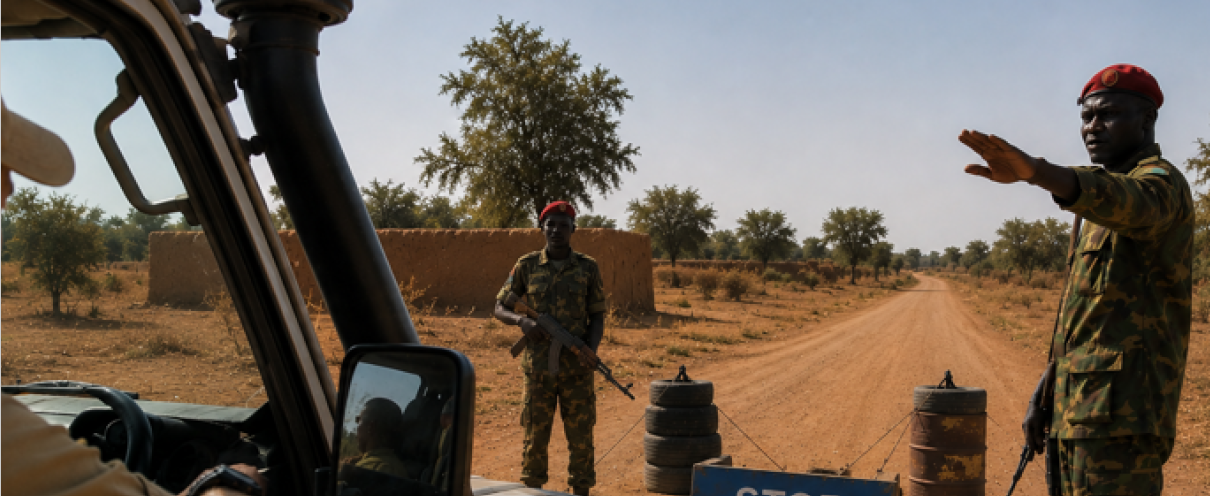
Beyond HEAT: Rethinking Safety and Security Training for National Staff in South Sudan
Practical security training for the people delivering programmes every day
National staff are at the heart of humanitarian operations across South Sudan. They travel to field locations, navigate checkpoints, support distributions, engage with communities and keep programmes moving in some of the country's most challenging environments.
Every year, humanitarian organisations invest considerable time and resources in preparing international staff to work in complex environments. HEAT courses, pre-deployment briefings, security inductions and journey management procedures are all well-established parts of responsible security management. In South Sudan, where organisations operate across an exceptionally varied and often difficult security environment, that preparation is essential.
There is, however, an opportunity to think more broadly about how we prepare national staff for the risks they encounter. South Sudanese colleagues are the backbone of humanitarian operations across the country. They are often the people travelling most frequently to project locations, managing distributions, engaging with communities and authorities, maintaining field offices and continuing programmes through periods when international movement may be restricted.
Their exposure to risk can also look quite different. For national staff, personal security does not begin when they arrive at the office and end when they leave it. The journey home, the security of their house or compound, their visibility within their own community and the routes they travel outside working hours can all form part of their wider risk environment. This creates an important question for organisations working in South Sudan: does the security preparation we provide reflect the reality of how our national colleagues live and work?
Moving beyond a standard security course
This was the thinking behind Archer's Personal Safety & Security Training programme for national staff in South Sudan. It was not developed as a replacement for HEAT, nor as a simplified version of a course designed for international personnel. It was developed around a different starting point: understanding the practical risks national colleagues face and giving them useful tools for managing those risks.
That distinction matters. A member of staff travelling home through Juba in the evening may need to think about route variation, situational awareness and what to do if they believe they are being followed. Someone regularly travelling through field locations may need greater confidence in checkpoint behaviour, negotiation and communications. Staff living in residential compounds may benefit from understanding relatively simple measures that can improve security at home, as well as knowing what to do during a compound intrusion or when gunfire occurs nearby.
The objective is not to make employees responsible for managing risks that properly sit with their organisation. Duty of care remains an organisational responsibility, supported by appropriate security management, procedures, information and resources. Training complements those systems by giving staff the knowledge and confidence to make better decisions when they are the person actually facing the situation.
South Sudan cannot be treated as one security environment
One of the most important principles behind effective security training in South Sudan is recognising how significantly the operating environment changes from one location to another. A generic national security briefing can provide a useful baseline, but it cannot fully prepare someone for the particular dynamics they may encounter in their own location.
Yei is a good example. When preparing personnel who travel in and around Yei and parts of Central Equatoria, kidnapping and abduction may form part of the risk discussion. That does not mean kidnapping should automatically be given the same prominence in training delivered elsewhere in South Sudan. In another location, road ambushes, communal conflict, armed robbery, cattle-related violence, UXO, civil unrest or compound intrusion may be considerably more relevant.
The same principle applies at a much more detailed level. Checkpoints exist throughout South Sudan, but the nature of those checkpoints, the actors involved and the way an organisation expects its personnel to respond can vary. A team regularly conducting road movements needs to understand not only general checkpoint principles but the situations it is reasonably likely to encounter on its actual routes.
Good security awareness training therefore needs both consistency and flexibility. There are core principles that apply everywhere, but those principles become considerably more useful when they are connected to local circumstances.
What we have learned from delivering training in the field
Our experience delivering safety and security training for humanitarian organisations across South Sudan has reinforced the value of this approach.
In Lankien, Archer supported Oxfam with safety and security training connected to field operations, including food distribution activities. The security considerations surrounding a distribution are particular to that activity. Staff need to understand crowd dynamics, access and exit routes, communications, community engagement and the early indicators that a situation may be changing. Training becomes more valuable when those issues are discussed in relation to the distributions staff are actually supporting rather than as abstract scenarios.
In Pibor, our training has included a particular focus on compound intrusion and how staff should respond. Here, the value lies in moving beyond the identification of compound intrusion as a threat and working through the response itself: where staff should move, how information is communicated, when assistance is requested and how individual actions can either reduce or inadvertently increase the risk during an already difficult situation.
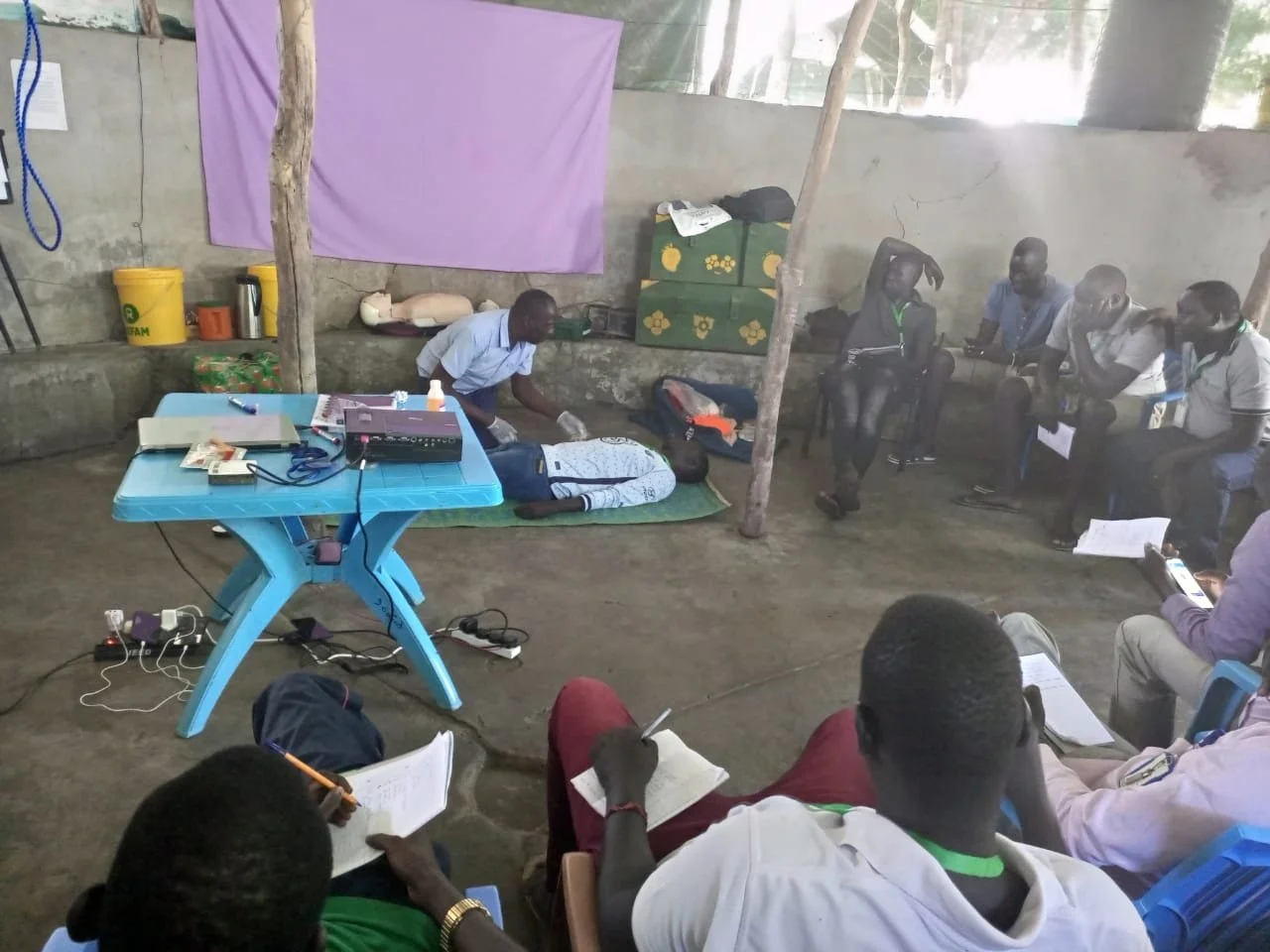
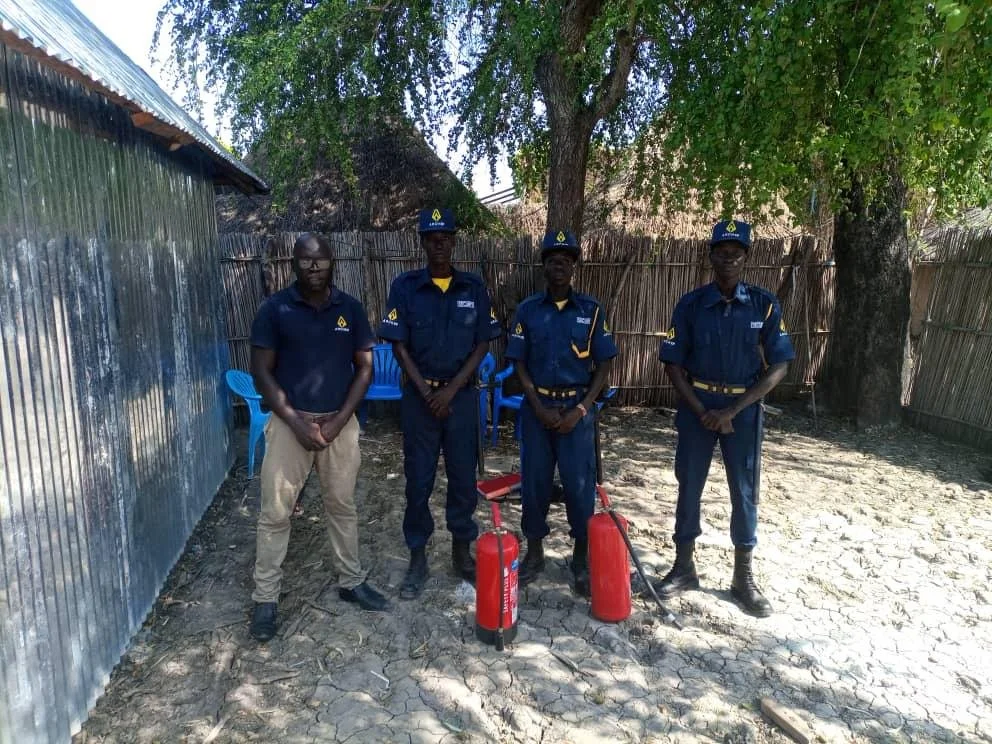
Our work with Caritas Austria in Yambio took a different approach again. The security workshop combined familiarisation with Caritas' own security SOPs with broader security awareness training. Staff considered threats, vulnerabilities and risk; personal safety at home and in the office; journey management; and appropriate conduct at security checkpoints. The programme also incorporated practical fire safety and Basic First Aid, including scene assessment, treatment priorities and responses to bleeding, burns, fractures and cardiac emergencies.
These examples are different because the organisations, activities and locations were different. That is precisely the point. Effective training should have enough structure to provide a consistent standard while remaining flexible enough to address the circumstances in which people actually operate.
Making security training relevant to the individual
There is another dimension that is sometimes overlooked. Location is only one part of the risk picture; people's roles matter too.
A driver travelling several hours each day may need a greater emphasis on journey management, vehicle safety, checkpoints and what to do following an incident on the road. A programme team supporting distributions may need more discussion around crowds, community tensions and maintaining situational awareness while focused on programme delivery. Staff working predominantly from an office may benefit more from compound security, fire safety, emergency procedures and personal security during their journey to and from work.
This is why we believe bespoke security training should begin with a conversation about the organisation. We want to understand where staff are working, what they are doing, what incidents or near misses the organisation has experienced, what concerns staff themselves have raised and what security procedures are already in place. Where appropriate, an organisation's own SOPs and security plans can then be incorporated into the course.
This also avoids creating a parallel security system in the classroom. Training should reinforce an organisation's existing security management arrangements, not inadvertently introduce procedures that contradict them.
The value of taking training out of Juba
There are clear practical advantages to delivering training in Juba, particularly where organisations want to bring together staff from several locations. Archer can deliver the Personal Safety & Security course in Juba in English or Arabic and tailor it to the roles and locations represented in the room.
There is also considerable value in taking safety and security training into field locations. When training is delivered in Yei, Pibor, Yambio, Lankien, Bentiu, Malakal or another operational location, the surrounding environment itself becomes part of the learning.
A checkpoint exercise can be discussed in the context of checkpoints staff regularly encounter. A compound-security session can consider the actual layout and vulnerabilities of the facility in which people work. Journey management can be related to real routes and realistic alternatives. Staff can discuss incidents and near misses that have occurred locally and consider what can be learned from them.
This makes security training less theoretical and allows participants to connect broader security principles with their own experience and local knowledge. Importantly, it also recognises that national staff are not passive recipients of security information. They often have an exceptionally detailed understanding of their operating environment. Effective training creates space for that knowledge to form part of the discussion.
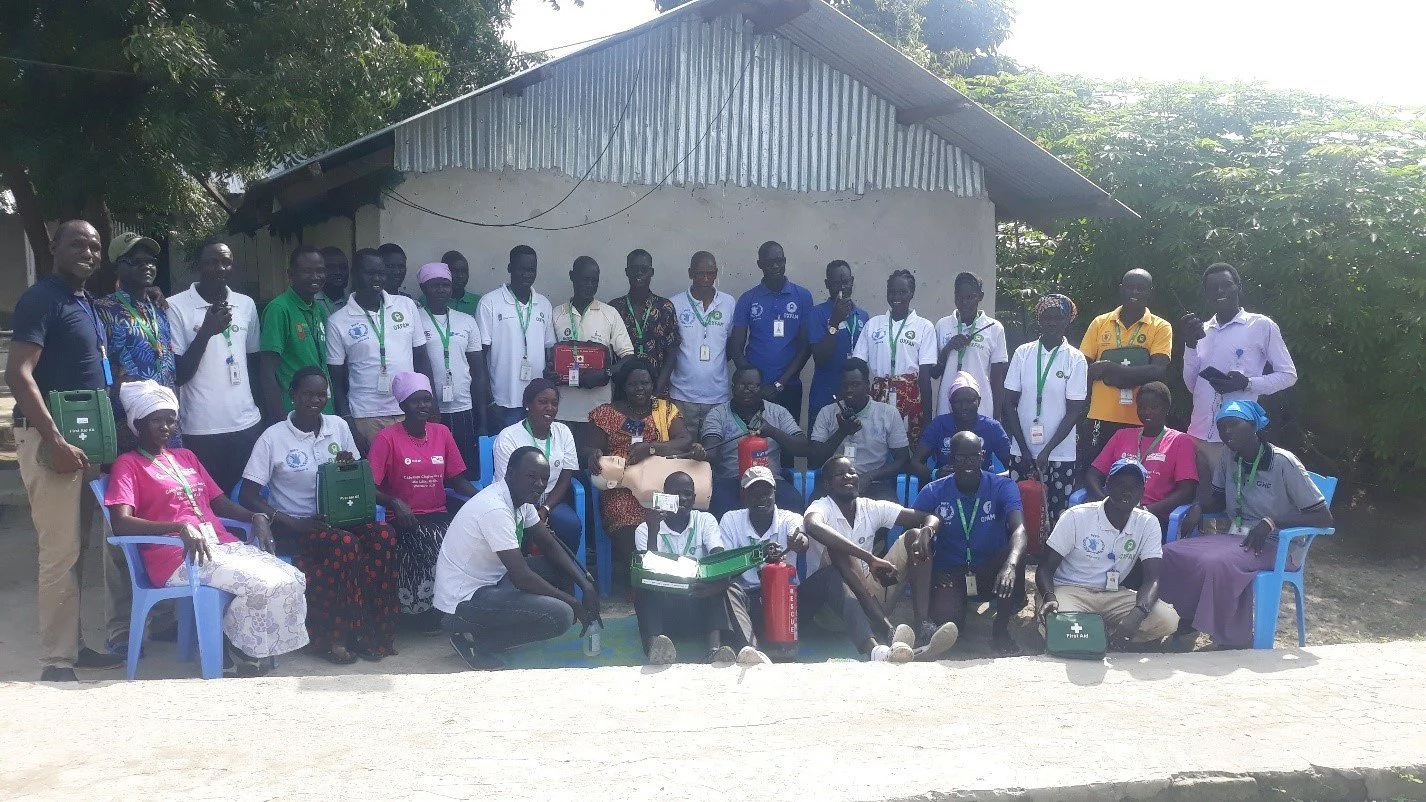
Security & Safety at GDF sites in Lankien for Oxfam
Practical capability matters
Security awareness is only part of preparedness. Our Personal Safety & Security course can include situational awareness, risk mitigation, journey management, vehicle and road safety, checkpoint behaviour and negotiation, UXO and mine awareness, residential and compound security, communications, incident reporting, human rights and PSEA, and emergency decision-making.
We also place considerable emphasis on practical First Aid and Fire Fighting training. These are skills that can benefit staff professionally and personally. Understanding how to assess a casualty, control serious bleeding or respond appropriately to a fire provides a practical capability that extends well beyond a security classroom.
This combination of awareness and practical skills is important. The purpose of training should not simply be to demonstrate that a topic has been covered or that staff have attended a course. The more useful measure is whether people leave better able to recognise a developing problem, understand the options available to them and respond appropriately under pressure.
Broadening the conversation around duty of care
The humanitarian sector in South Sudan already invests significantly in staff safety and has developed sophisticated approaches to security management in an extremely challenging environment. The opportunity is not to replace those systems, but to continue broadening the conversation about who receives structured security preparation and what that preparation should look like.
National staff bring enormous contextual knowledge to humanitarian operations. They understand communities, languages, relationships and local dynamics in ways that cannot be replicated through a briefing. At the same time, familiarity with an environment should not be confused with immunity from its risks. Local knowledge and structured security preparation should complement one another.
As we mark World Humanitarian Day, this is worth reflecting on. If national colleagues are routinely travelling into the field, passing through checkpoints, supporting distributions, working in remote communities and responding when programmes face disruption, investing in their personal safety and preparedness should be considered an integral part of organisational duty of care.
To mark World Humanitarian Day, Archer is offering 10% off our Personal Safety & Security Training for national staff in South Sudan. Courses can be delivered in English or Arabic, either in Juba or in field locations across South Sudan, and can be adapted to an organisation's existing SOPs, operating locations, staff roles and specific risk environment.
For us, the principle is straightforward: good security training should reflect the people receiving it, the work they do and the places in which they actually operate.

South Sudan's First UNESCO World Heritage Site: A Landmark Achievement – But What Comes Next?
International headlines have largely been shaped by conflict, humanitarian crises and political uncertainty. While these stories reflect genuine challenges, they have also obscured another reality: South Sudan is a country of extraordinary natural beauty, rich cultural heritage and remarkable resilience. Last week's inscription of the Boma–Badingilo Migratory Landscape as South Sudan's first UNESCO World Heritage Site offers the world a rare opportunity to look at the country through a different lens.
A New Story for South Sudan
For much of its short history, South Sudan has struggled to control its own narrative.
International headlines have largely been shaped by conflict, humanitarian crises and political uncertainty. While these stories reflect genuine challenges, they have also obscured another reality: South Sudan is a country of extraordinary natural beauty, rich cultural heritage and remarkable resilience. Last week's inscription of the Boma–Badingilo Migratory Landscape as South Sudan's first UNESCO World Heritage Site offers the world a rare opportunity to look at the country through a different lens.
The designation is undoubtedly a landmark achievement. It recognises one of the world's most significant wildlife migrations, where vast herds of white-eared kob, tiang, Mongalla gazelle and other species move across an immense landscape that remains one of Africa's last great wildernesses. It is an important victory for conservation, for science and for the communities that have lived alongside these ecosystems for generations.
Yet the significance of this moment extends far beyond wildlife.
The more interesting question is not what UNESCO has recognised, but what South Sudan chooses to do with that recognition.
Recognition Is Only the Beginning
History shows that World Heritage status does not automatically transform a country's fortunes. It does not build roads, attract airlines or create tourism industries overnight. What it does provide is something far more valuable: international attention. For countries seeking to diversify their economies and reshape global perceptions, attention is often the first step towards confidence. Confidence encourages investment, investment creates opportunity, and opportunity has the potential to reshape economies over time.
This is where the story becomes far more compelling than conservation alone.
South Sudan possesses many of the ingredients that have helped establish successful tourism economies elsewhere in Africa. Its landscapes remain largely untouched by mass development. Its wildlife migration is among the largest on the planet. Its cultural diversity is exceptional, and many areas retain an authenticity that has disappeared from more established destinations. At a time when travellers increasingly seek meaningful, sustainable and less commercialised experiences, these qualities may ultimately become some of South Sudan's greatest strengths.
Turning Potential into Opportunity
But natural assets alone have never been enough.
Botswana did not become a leading safari destination simply because it had elephants. Rwanda's reputation was not transformed by mountain gorillas alone. Across Africa, successful conservation has depended upon long-term investment in infrastructure, governance, community participation and institutions capable of protecting both people and the environment. Wildlife may attract attention, but confidence determines whether visitors arrive, businesses invest and local economies benefit.
For South Sudan, that confidence will need to be built carefully and consistently.
Political uncertainty, limited transport infrastructure and seasonal access remain genuine constraints. Key routes, including the Bor corridor, continue to present logistical and security challenges that influence how organisations plan operations and how investors assess risk. None of these realities diminish the importance of UNESCO recognition. Rather, they highlight the work that still lies ahead if this achievement is to become more than a symbolic milestone.
Security as an Enabler of Development
This is why it is perhaps more useful to think of security not as an industry, but as an enabler of development.
The word "security" often evokes images of guards, checkpoints or crisis response. In reality, successful development depends on something much broader: the confidence that people can travel, invest, conduct research, build businesses and support communities over the long term. Conservation organisations require stable access to protected areas. Researchers need reliable logistics. Tour operators depend on predictable infrastructure. Investors seek environments where projects can be delivered with confidence. In this sense, security is not the destination; it is one of the foundations upon which sustainable development is built.
Communities at the Heart of Conservation
Equally important is ensuring that the benefits of international recognition extend beyond the protected landscape itself. Around the world, conservation initiatives have sometimes struggled because local communities have seen little benefit from the resources surrounding them. South Sudan has an opportunity to pursue a different model—one in which communities are not simply custodians of wildlife, but active participants in the economic opportunities that conservation can create. Local guides, accommodation providers, transport operators, artisans and entrepreneurs all have the potential to become part of a wider ecosystem that supports both livelihoods and environmental protection.
There is another dimension to this story that deserves equal attention. UNESCO has inscribed the Boma–Badingilo landscape onto the World Heritage List while simultaneously placing it on the List of World Heritage in Danger. This is not a contradiction; it is a recognition that places of exceptional value often require exceptional protection. It acknowledges the pressures posed by poaching, climate change, unmanaged development and instability, while also inviting greater international cooperation to safeguard one of the world's most significant ecosystems. The designation should therefore be viewed not as the conclusion of a conservation journey, but as the beginning of a long-term commitment.
A Defining Moment
Perhaps the greatest opportunity created by this recognition is neither tourism nor conservation. It is the chance to redefine how South Sudan is perceived.
Nations, like companies, are shaped by their stories. For too long, South Sudan's story has been written largely by others and dominated by crisis. UNESCO has offered the country a different narrative—one centred on natural heritage, global significance and future potential. Whether that narrative takes hold will depend not only on government, but also on local communities, conservation organisations, responsible investors and the private sector working together towards a common vision.
The inscription of the Boma–Badingilo Migratory Landscape will not change South Sudan overnight. But it has changed the conversation.
The challenge now is to ensure that this moment becomes more than international recognition of an extraordinary landscape. It should become the starting point for broader discussions about conservation, infrastructure, investment and sustainable development. If South Sudan can build the confidence that transforms global attention into long-term partnerships, this UNESCO designation may ultimately be remembered not simply as the country's first World Heritage Site, but as the moment the world began to see South Sudan differently.
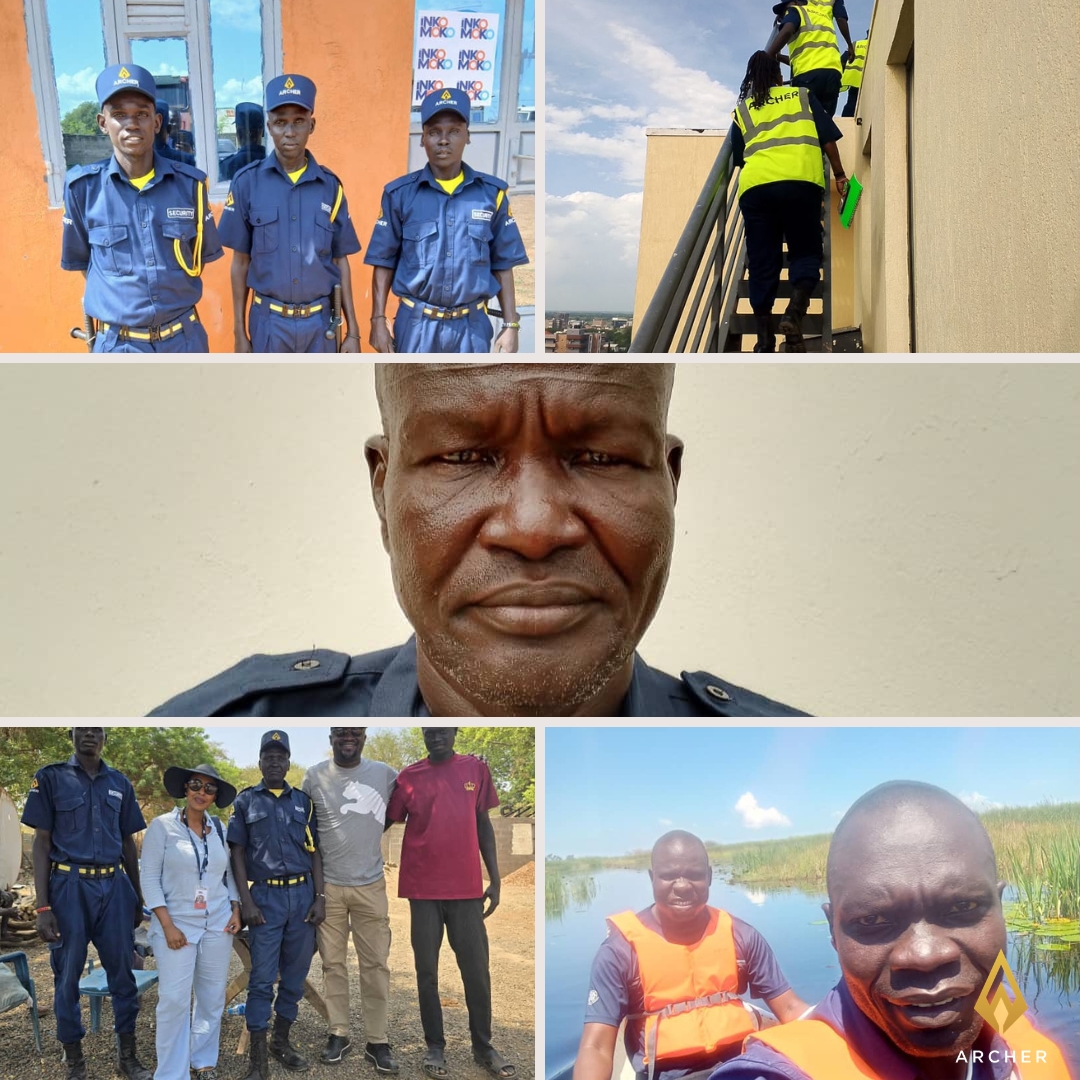
International Security Officer Day: Celebrating the People Behind Archer International
Celebrate International Security Officer Day with Archer International. Recognising the professionalism, dedication and teamwork of our Security Officers supporting humanitarian, diplomatic and commercial clients across South Sudan.
Every year, International Security Officer Day provides an opportunity to recognise the men and women who work tirelessly to protect people, organisations and communities around the world. At Archer International, it is also a chance to celebrate the people who have built our company from the ground up.
Since our establishment in South Sudan in 2019, Archer has grown into one of the country's leading providers of professional security services, supporting humanitarian organisations, diplomatic missions, commercial businesses and development partners across some of the most complex operating environments in East Africa.
Behind every successful deployment, every incident prevented and every client supported is a dedicated Security Officer.
Security Is About People
Security is often associated with uniforms, vehicles, technology and procedures. While these are all important, they are only tools.
Professional security begins with people.
Our officers are the first people our clients meet each morning and often the last they see before leaving site. They are responsible for access control, visitor management, emergency response, incident reporting, safeguarding personnel and maintaining a safe environment for thousands of staff and visitors every day.
Many also work in remote locations across South Sudan where professionalism, sound judgement and local knowledge are essential.
The quality of any security company is ultimately defined by the people wearing its uniform.
Six Years of Building Together
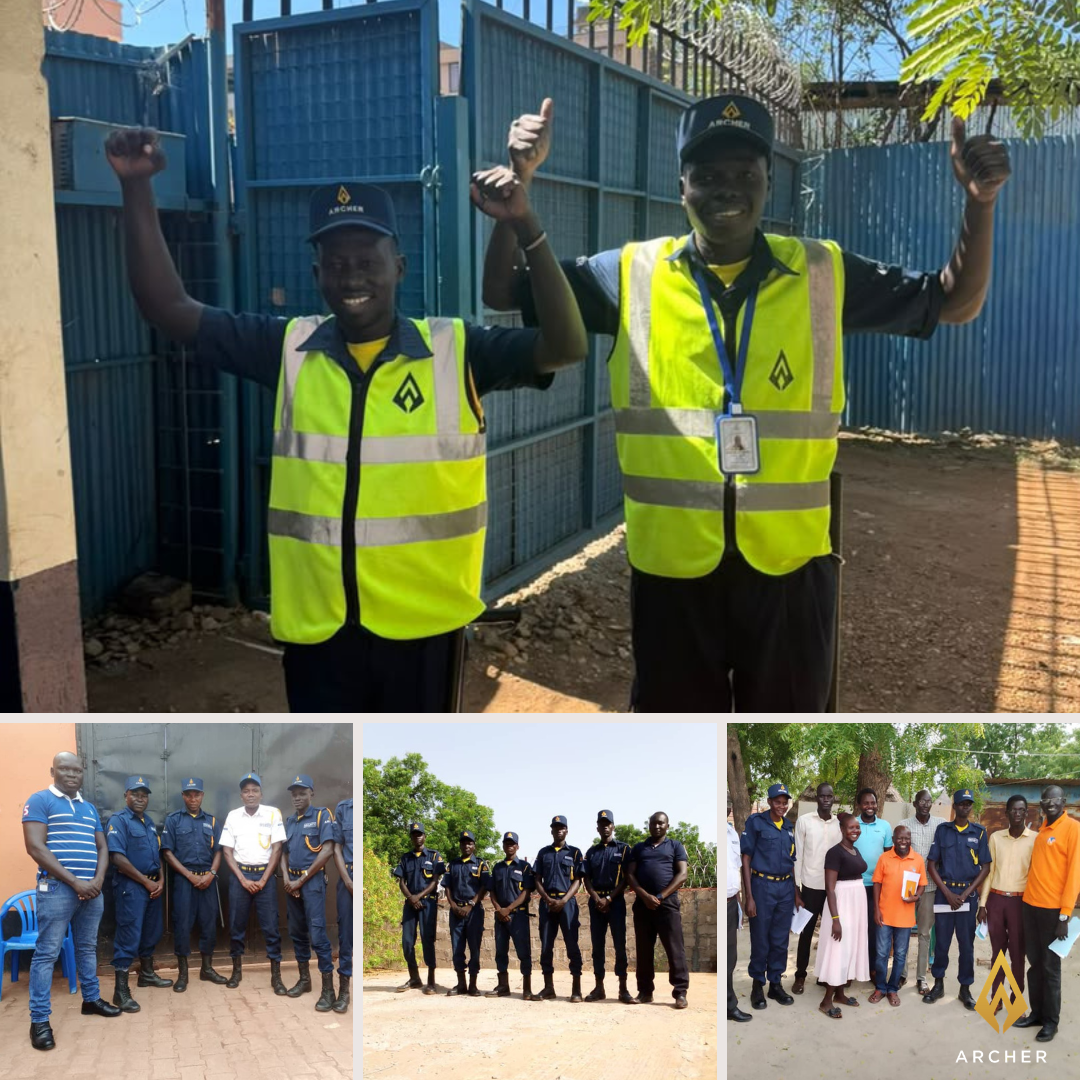
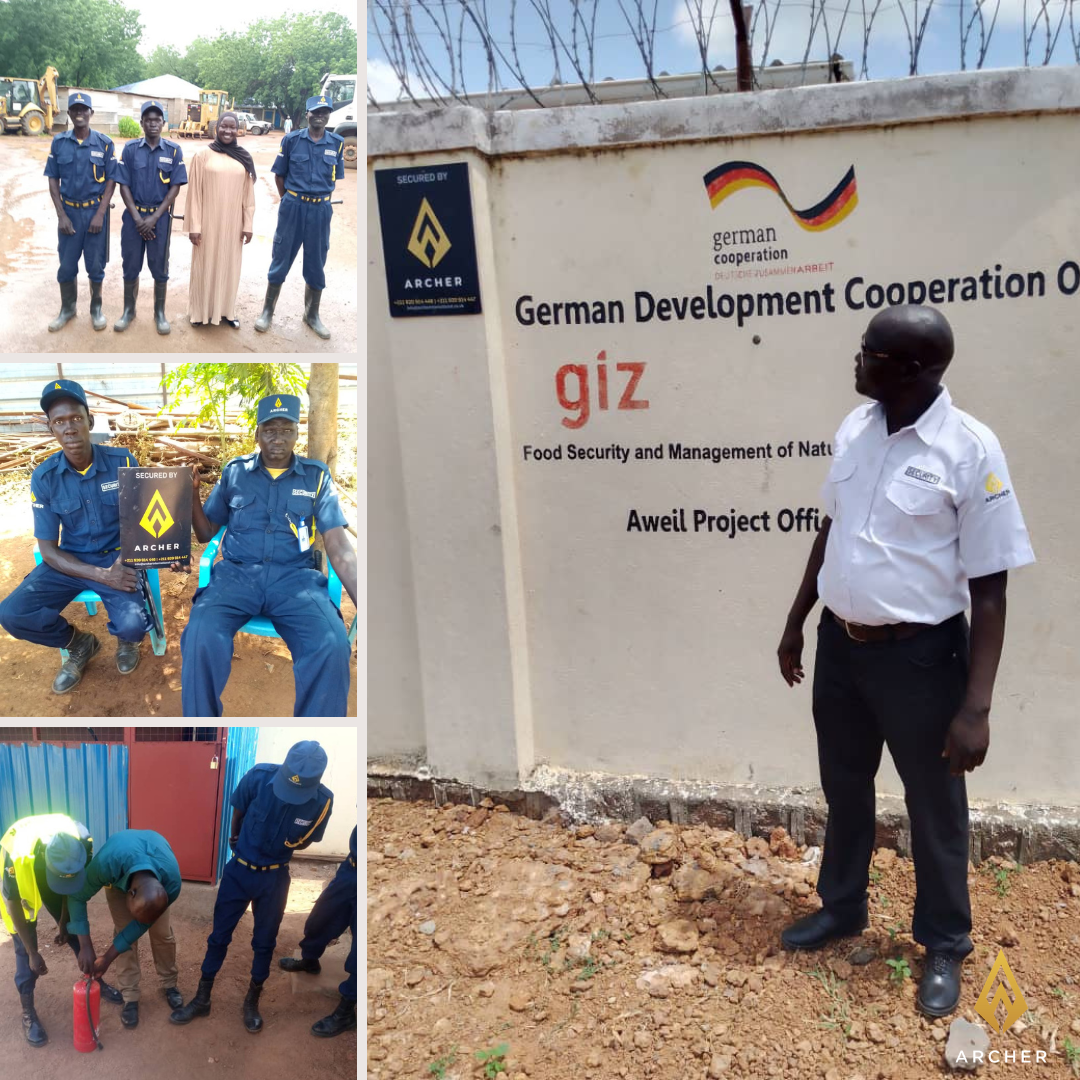
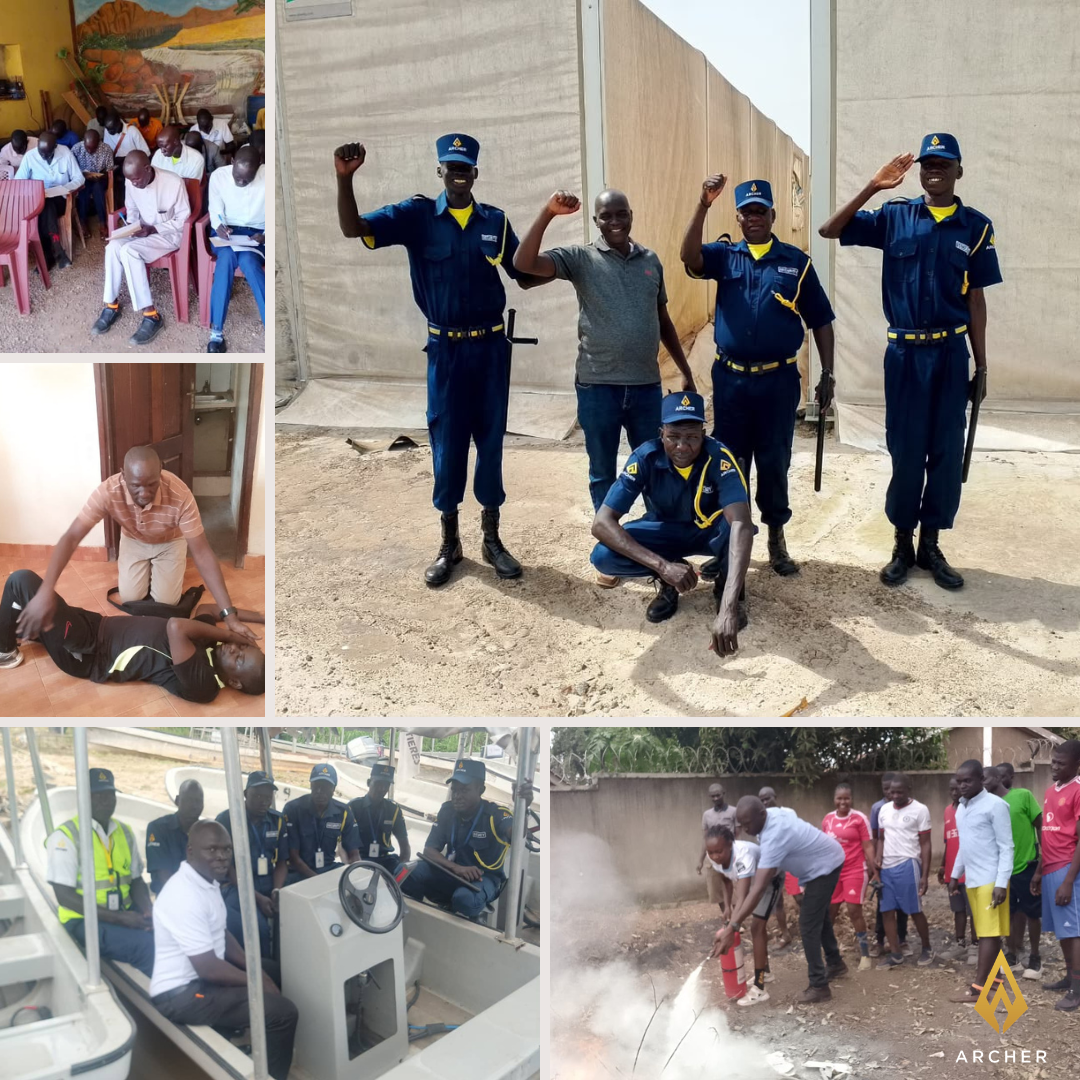
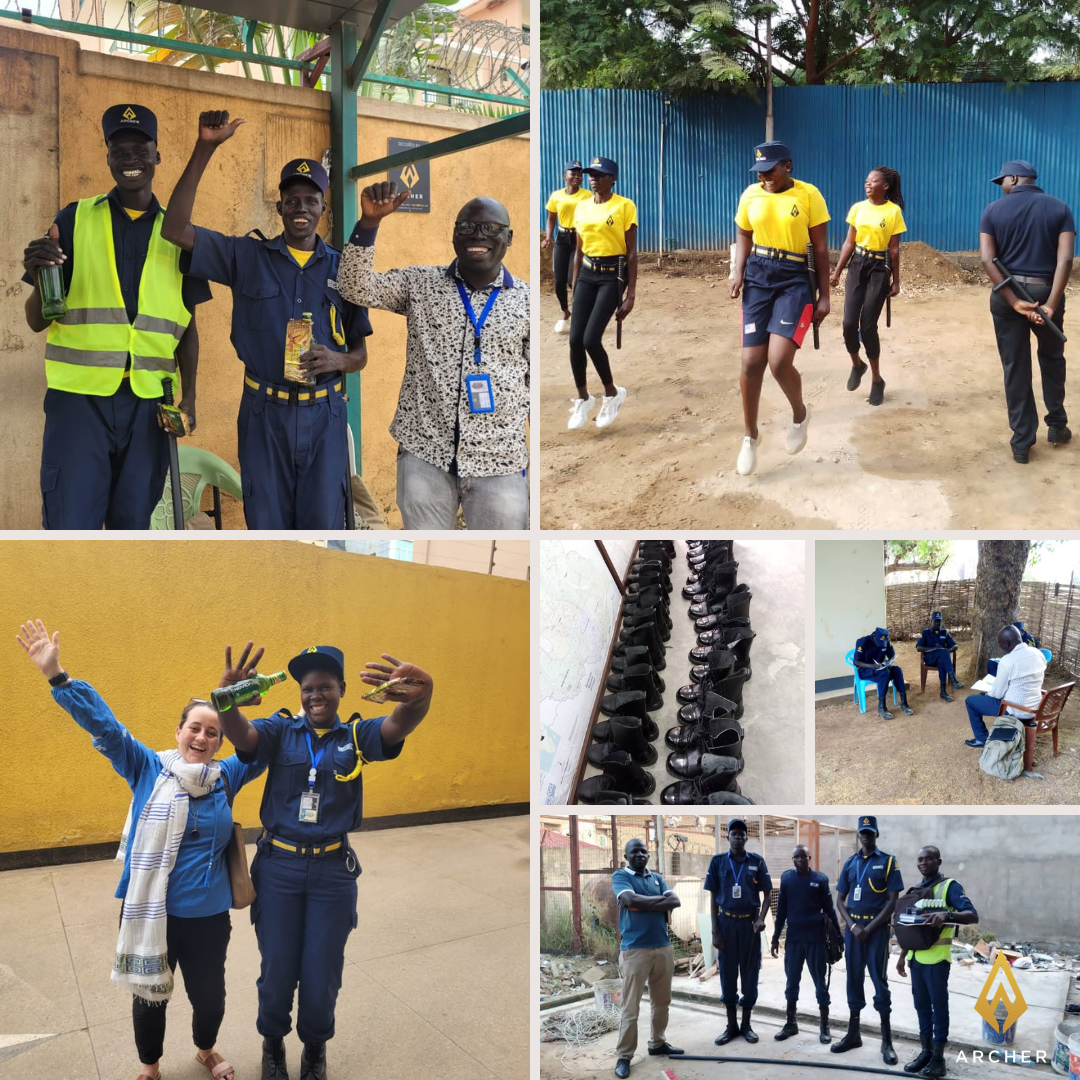
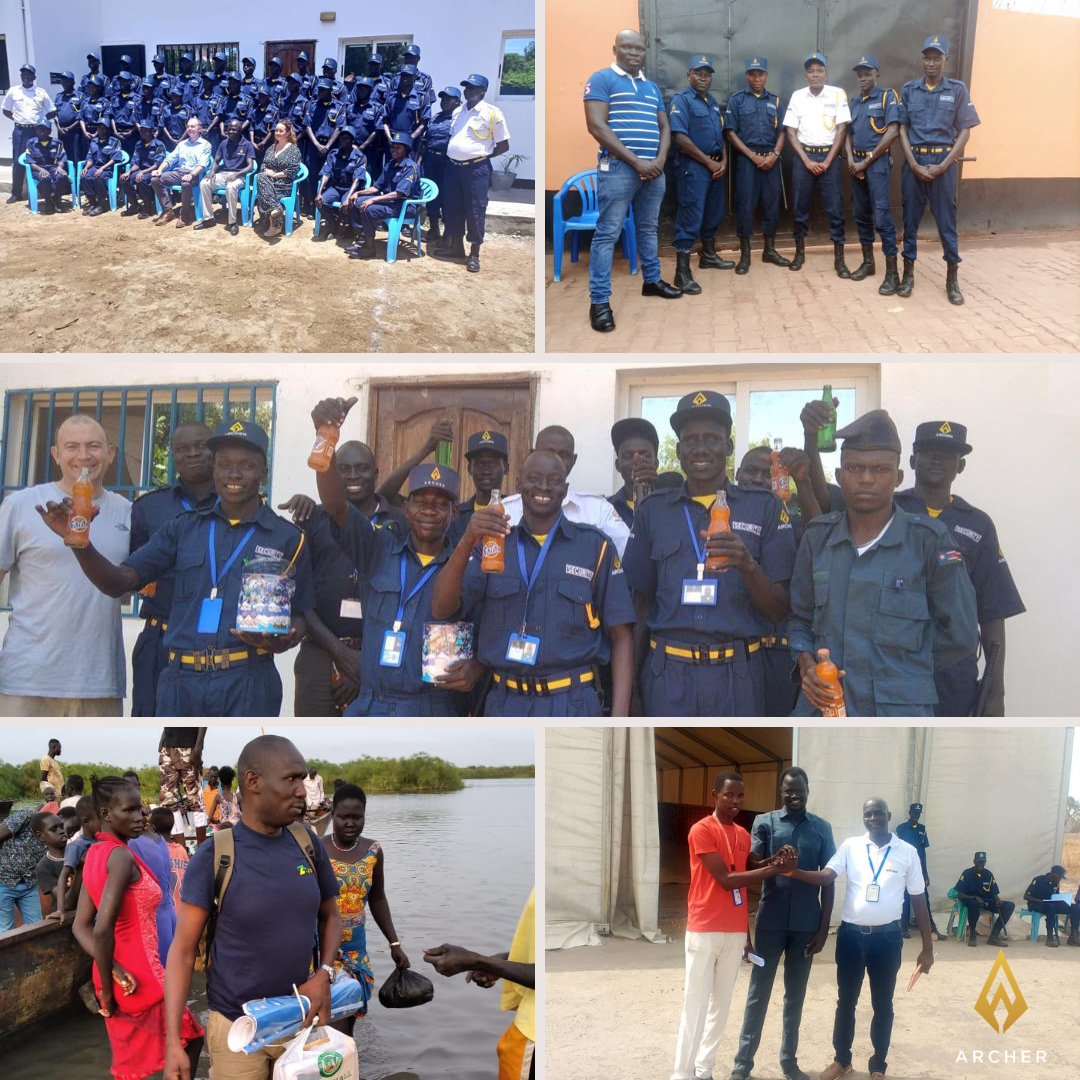
As Archer celebrates six years of operations in South Sudan, looking back through our photographs tells a much bigger story than contracts or deployments.
Many of our team members have worked alongside one another long before Archer was established. Others joined us as new recruits and have progressed through training, mentorship and promotion into leadership positions.
The photographs capture more than security officers standing on post.
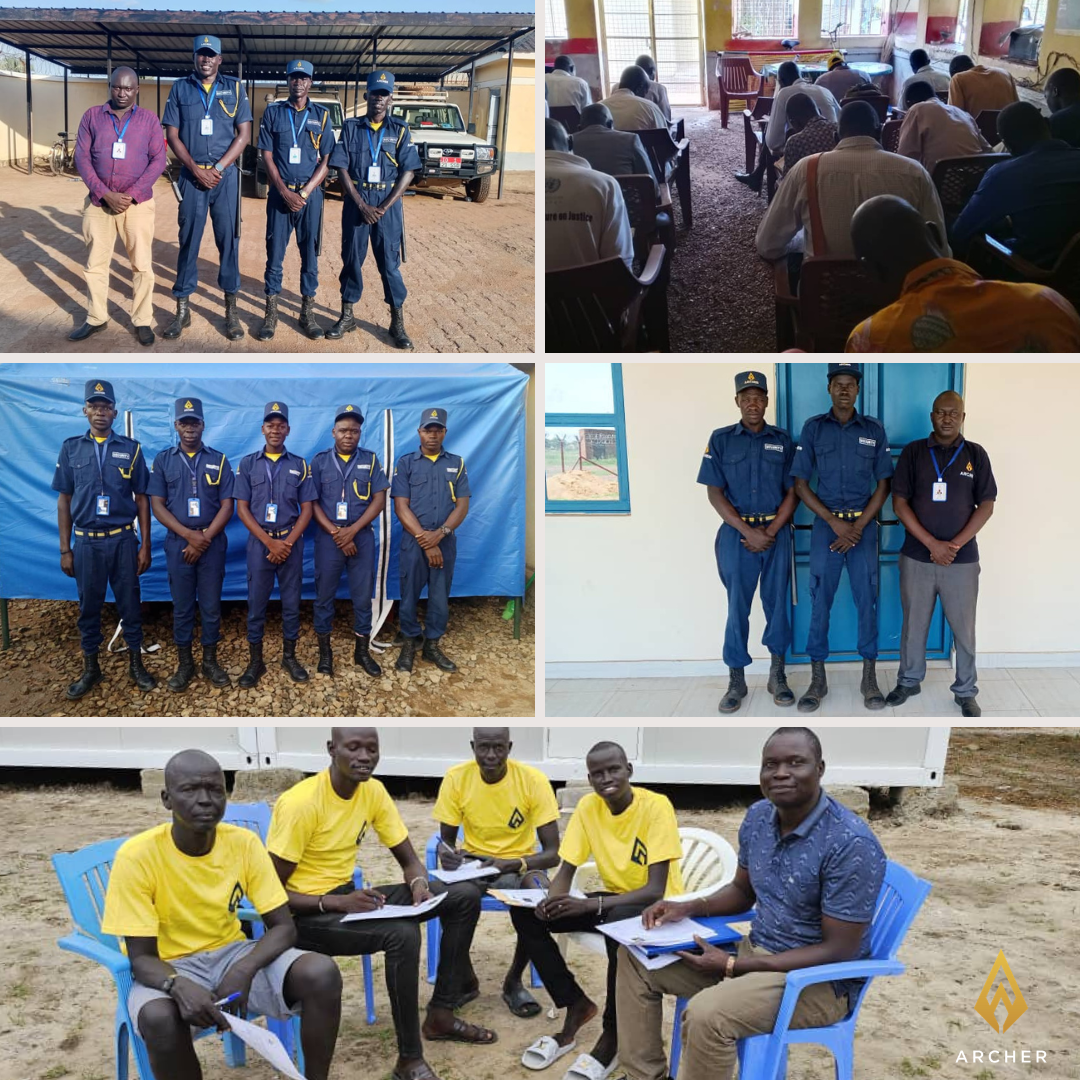
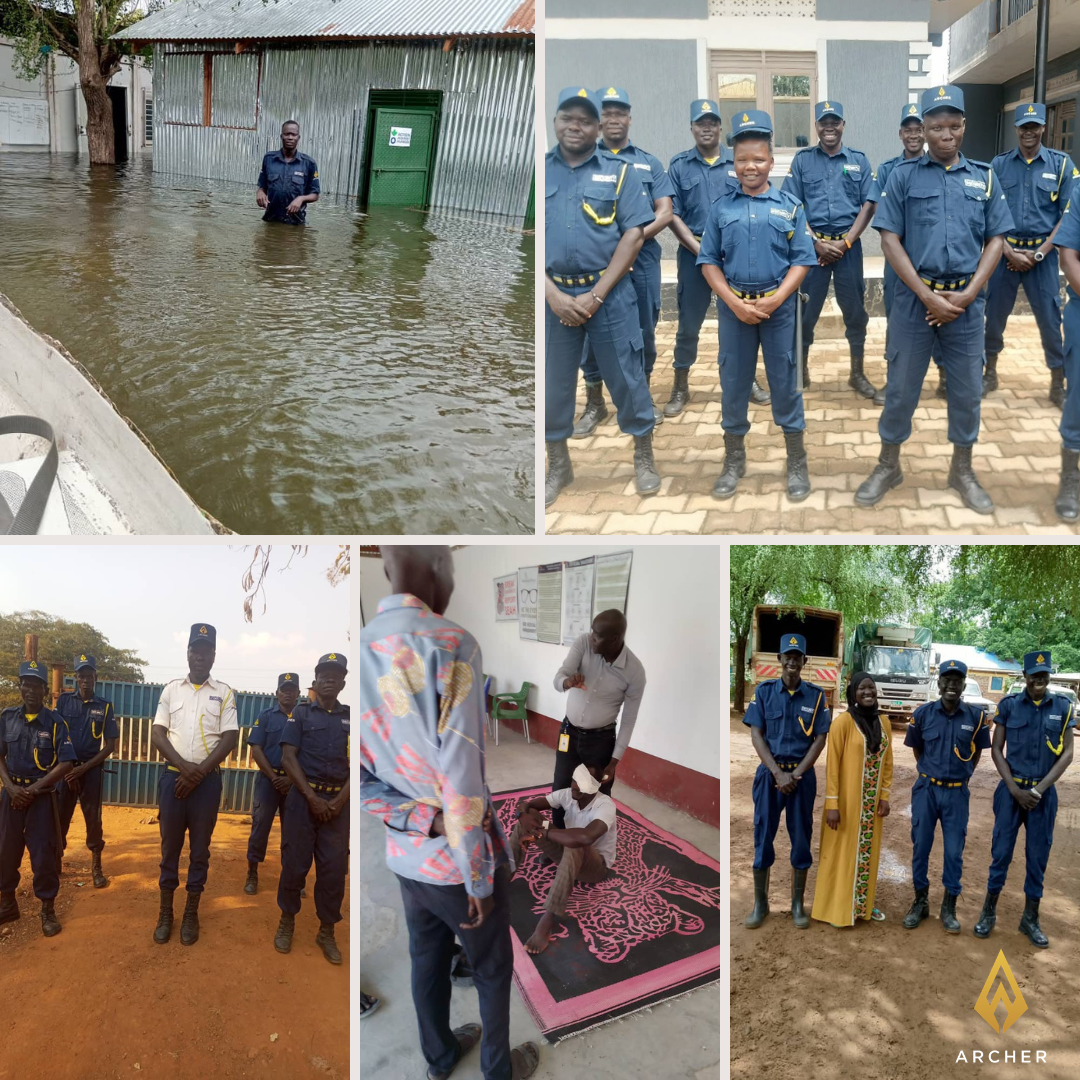
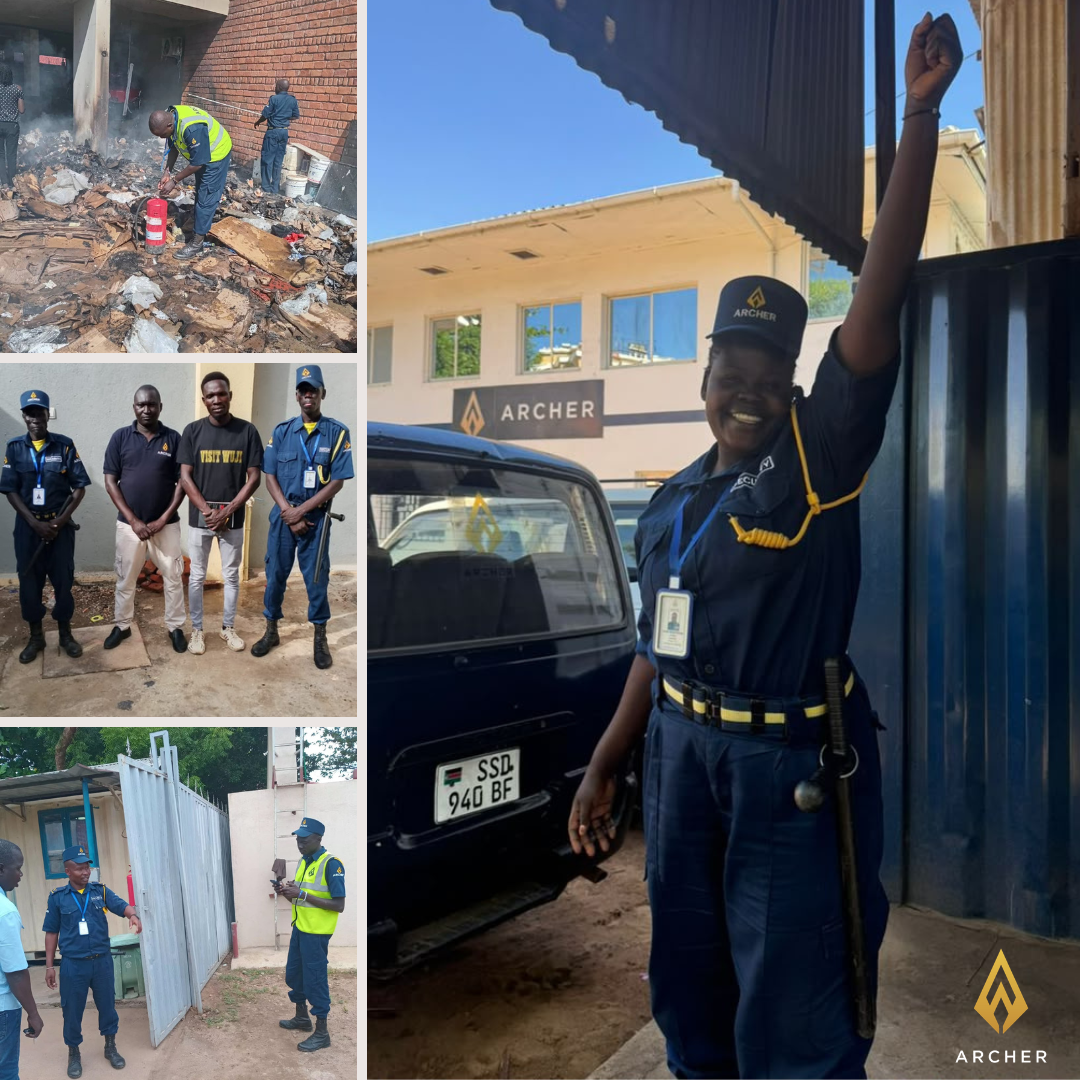
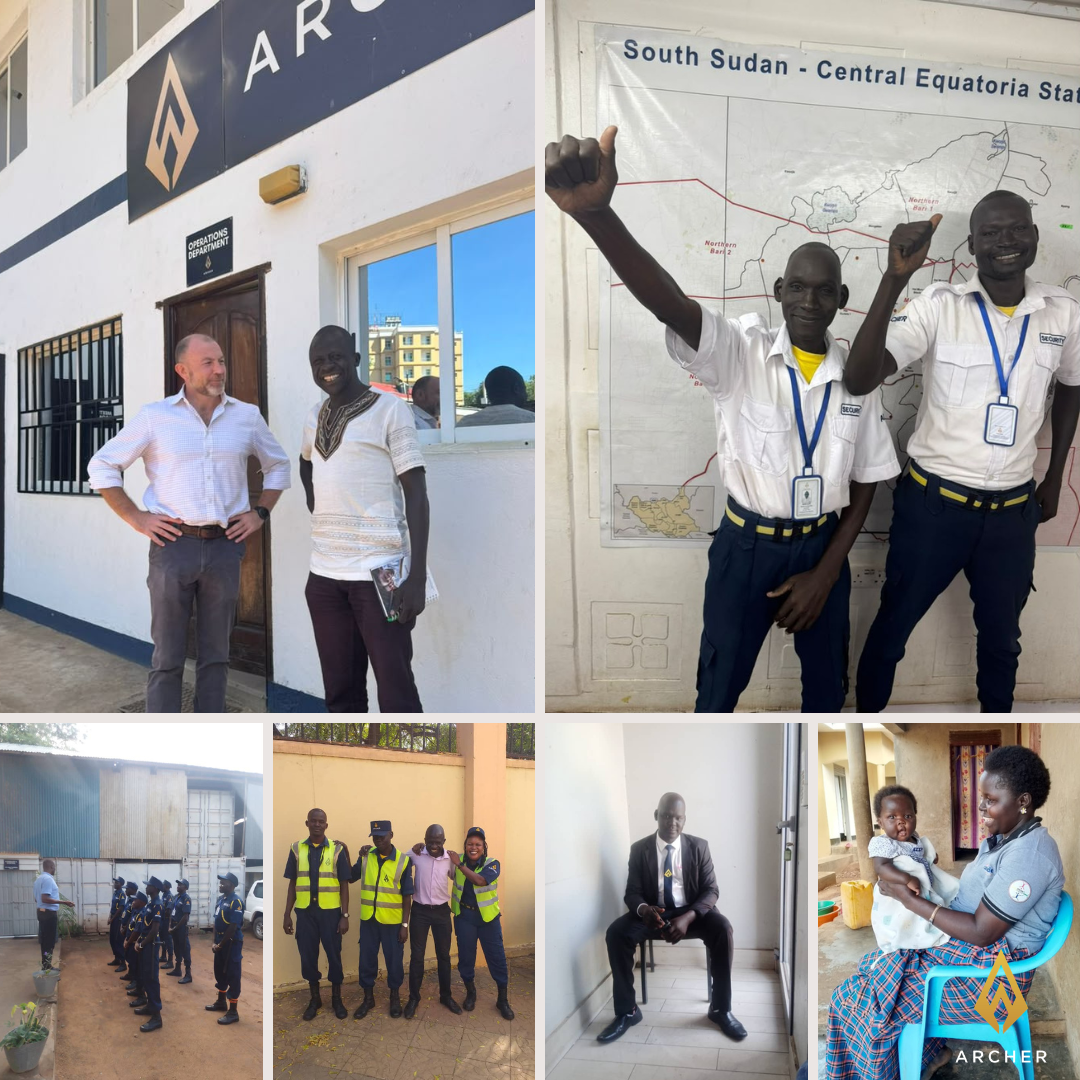
They show early morning briefings before deployment. Training exercises that sharpen lifesaving skills. Client visits across South Sudan. Fire safety drills. Community engagement. Team celebrations. Long days in challenging conditions. New uniforms. New offices. New contracts.
Every image represents people who have helped shape Archer into the organisation it is today.
Professional Security Through Continuous Training
One of Archer's core principles has always been that great security is built through continuous learning.
Every Security Officer receives structured induction training before deployment, followed by regular refresher training throughout their career.
Training covers far more than traditional guarding. Officers develop skills in:
Customer service and professional communication
Human rights and ethical security practices
Emergency response and incident management
Fire safety and first aid
Health and safety
Report writing
Access control and search procedures
Safeguarding and Protection from Sexual Exploitation and Abuse (PSEA)
This commitment to professional development helps ensure our clients receive consistent, high-quality security services across every location where Archer operates.
Supporting Humanitarian and Commercial Clients Across South Sudan
Our Security Officers support organisations working across South Sudan in humanitarian relief, development, infrastructure, diplomacy and the private sector.
These organisations often operate in demanding environments where reliable security enables them to continue delivering healthcare, education, food assistance, livelihoods programmes and commercial operations safely.
Security is rarely the headline.
But it is often the foundation that allows everything else to happen.
A Team Built on Trust
One of Archer's greatest strengths has always been its people.
We believe that the best teams are built through mutual respect, shared responsibility and looking after one another. Whether someone is a newly recruited Security Officer or a senior manager, everyone contributes to the same mission.
That culture extends beyond our own staff to the relationships we build with our clients, local communities and partners across South Sudan.
Professional security is ultimately built on trust.
Looking Ahead
International Security Officer Day is an opportunity to reflect on how far we have come, but it is also a reminder of where we are going.
As South Sudan continues to develop, the need for professional, ethical and highly trained security providers will only continue to grow. Archer remains committed to investing in our people, embracing new technology, maintaining international best practice and continually raising standards across the private security industry.
To every Archer Security Officer—past and present—thank you.
Your professionalism, commitment and resilience have built this company. We are proud of everything we have achieved together, and even more excited about what lies ahead.
Happy International Security Officer Day from everyone at Archer International.
Building Resilience Beyond Security: Archer International Recognised with ICoCA Responsible Security Award 2025
Archer International has been recognised with the 2025 ICoCA Responsible Security Award for its community-centred approach to security in Fangak County, South Sudan.
At Archer International, we have always believed that responsible security extends far beyond protecting people and assets. In fragile and conflict-affected environments, security providers have a responsibility to support the communities in which they operate, uphold human rights, and enable humanitarian organisations to continue delivering essential services.
We are therefore proud to announce that Archer International has been recognised by the International Code of Conduct Association (ICoCA) as a recipient of the 2025 Responsible Security Award, an initiative supported by the UK Foreign, Commonwealth & Development Office (FCDO).
Our award-winning case study, Building Resilience Amid Flooding and Conflict, highlights our work in Fangak County, Jonglei State, South Sudan, and demonstrates how responsible private security can make a positive contribution in some of the world's most complex humanitarian environments.
Operating in One of the World's Most Challenging Environments
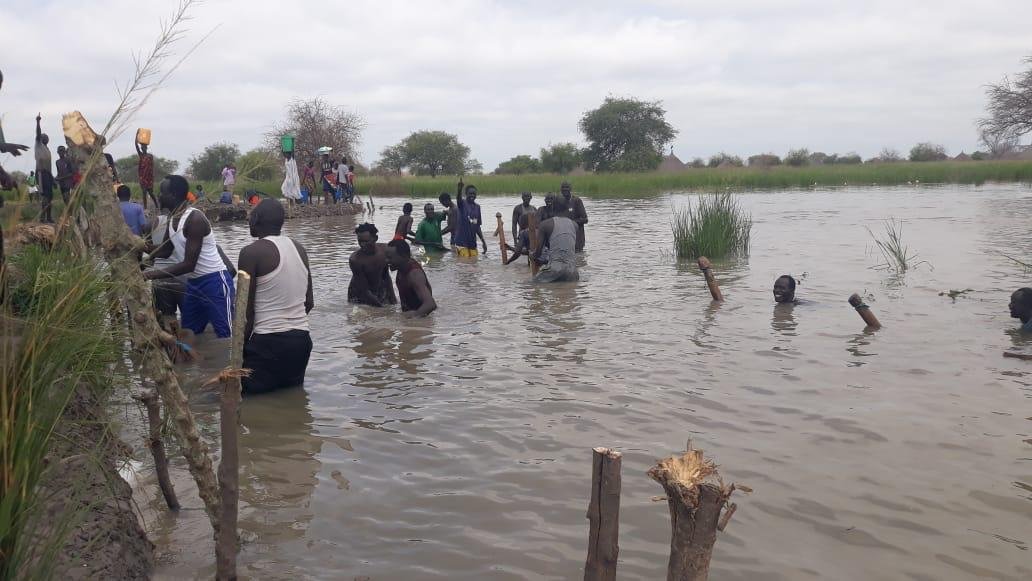
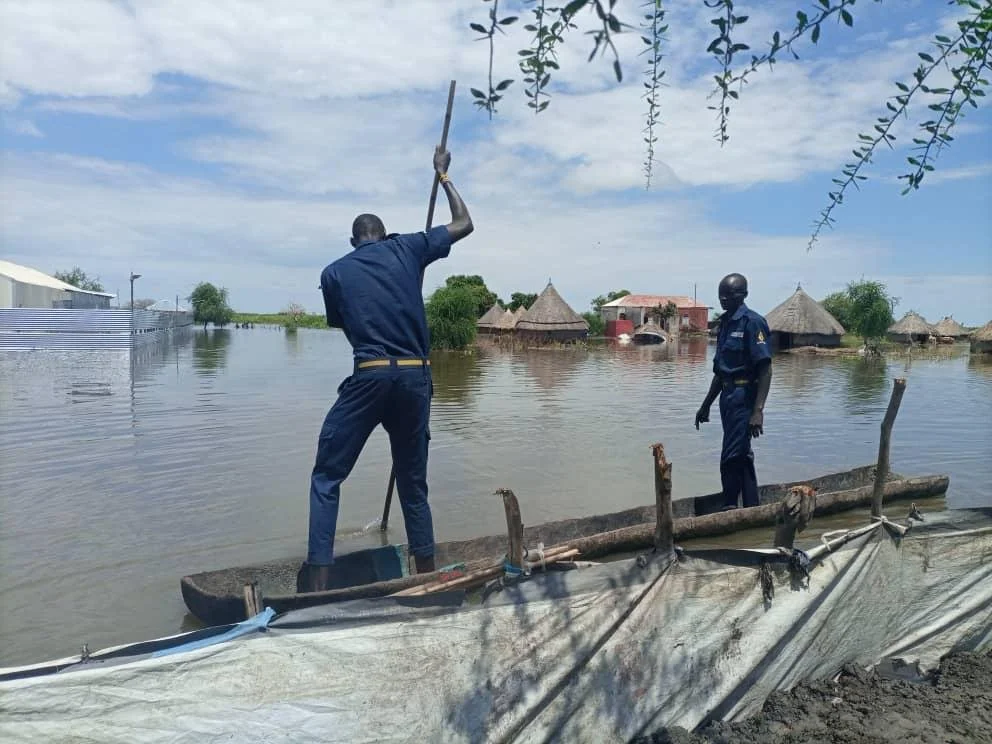
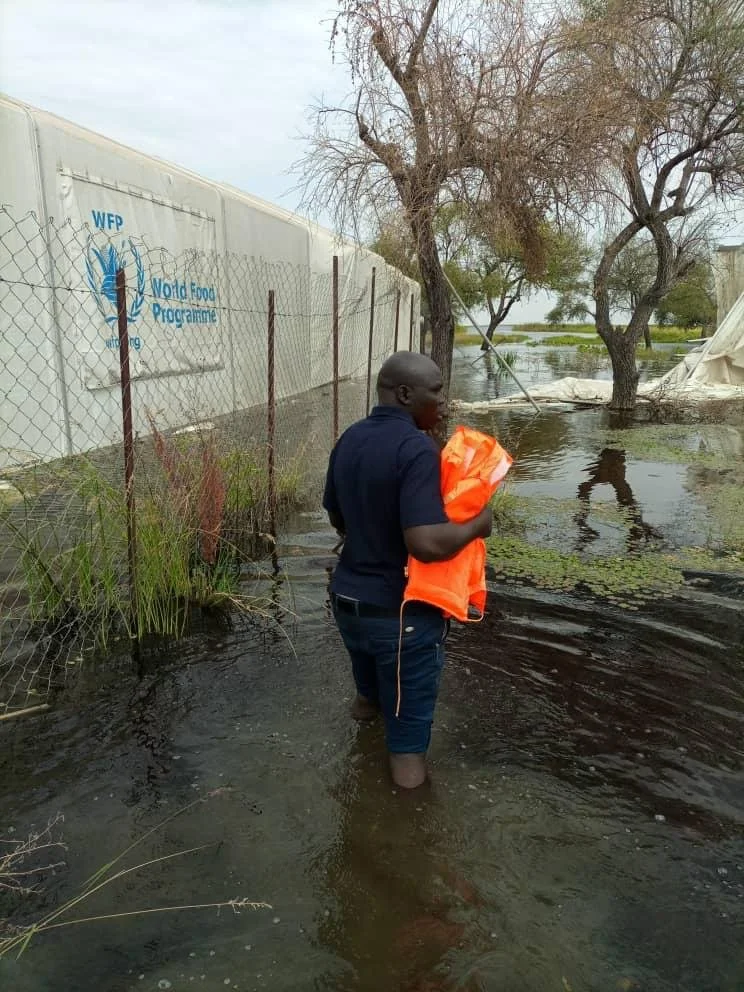
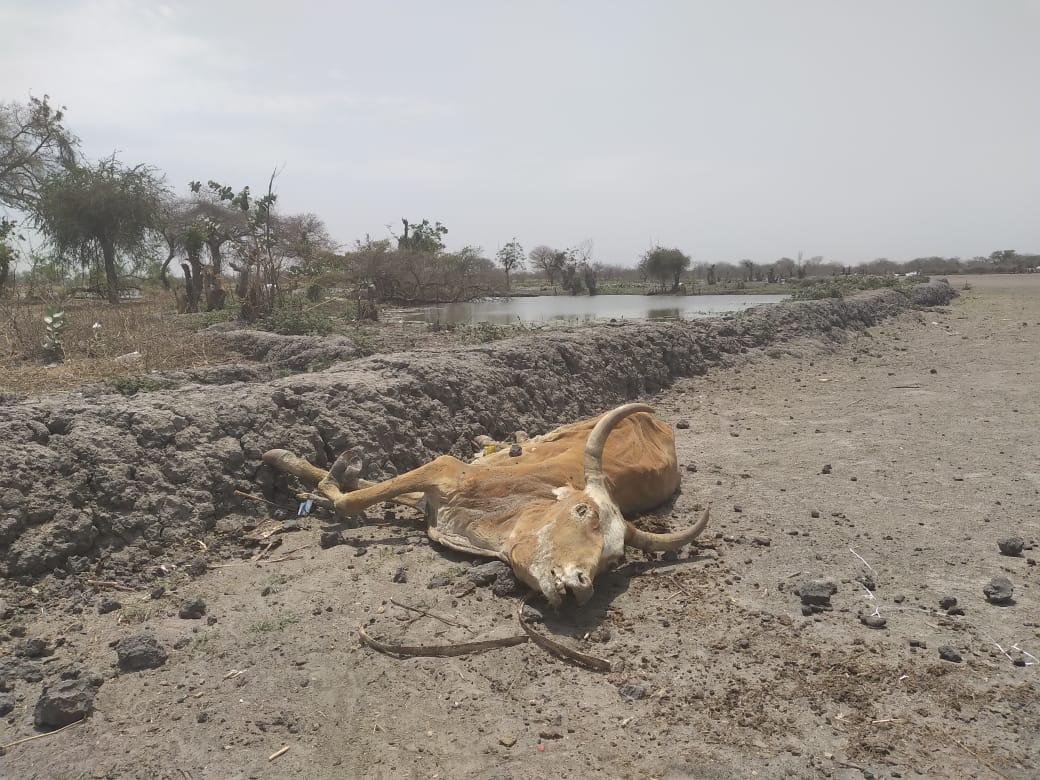
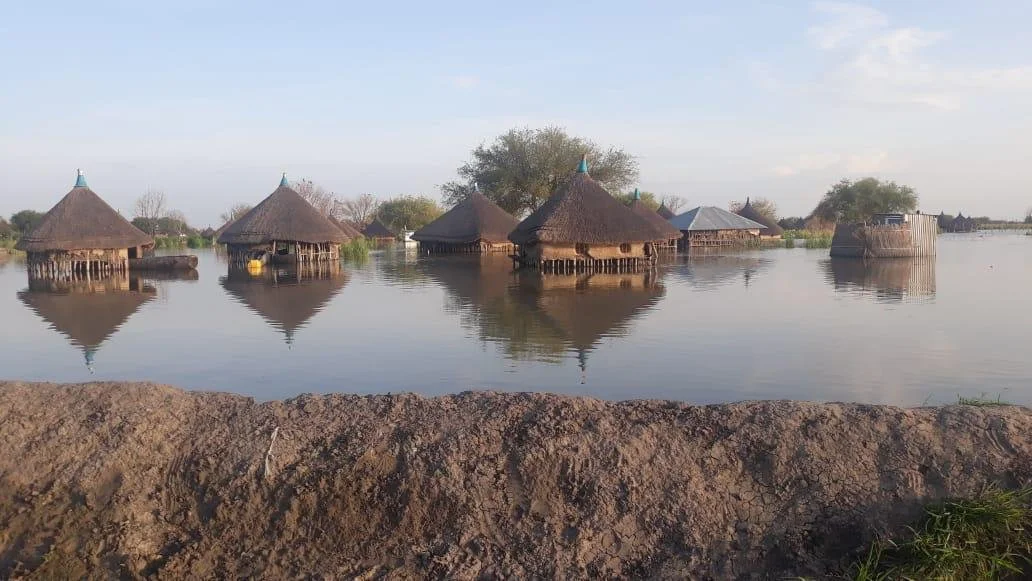
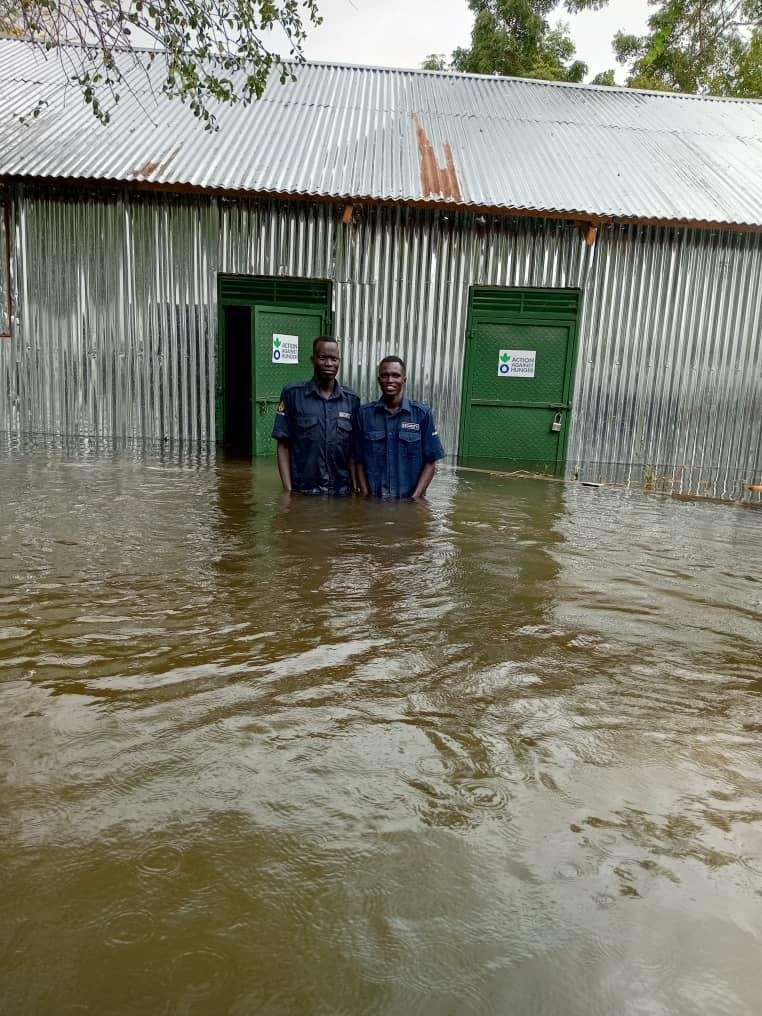
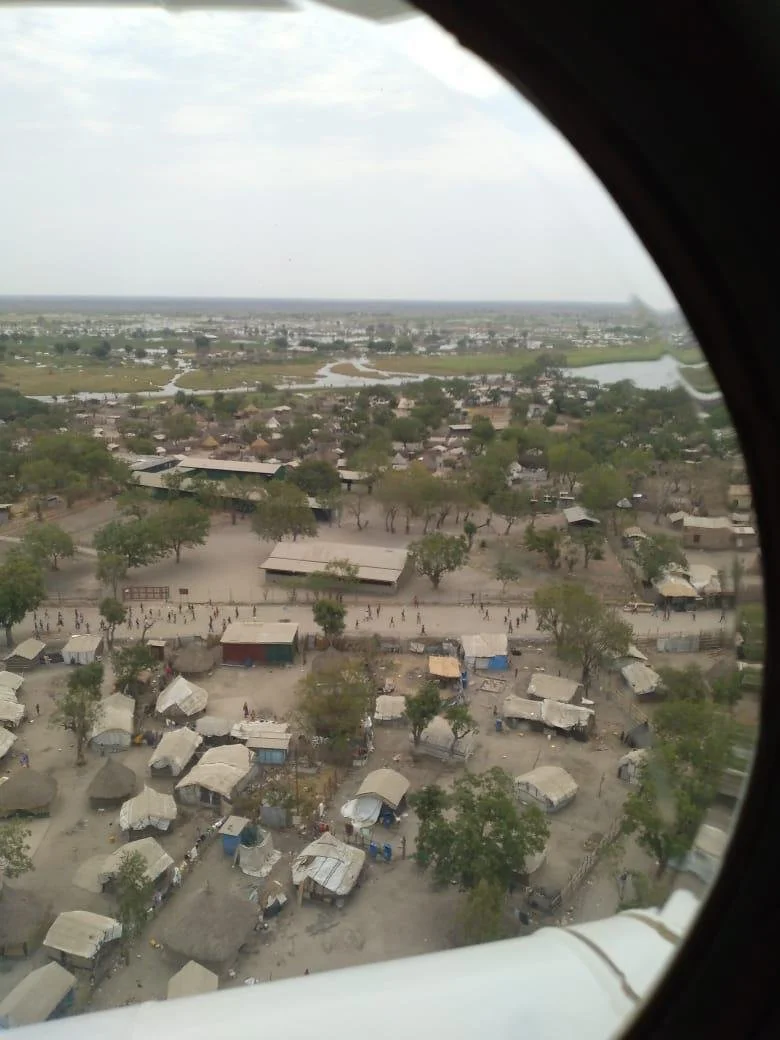
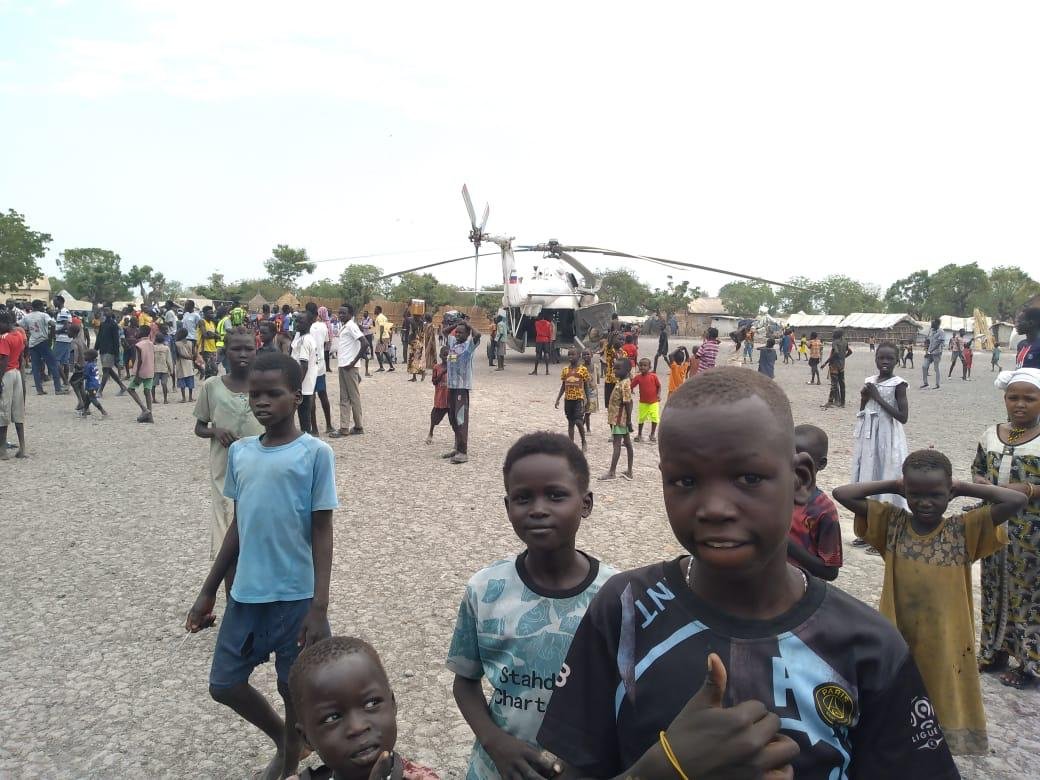
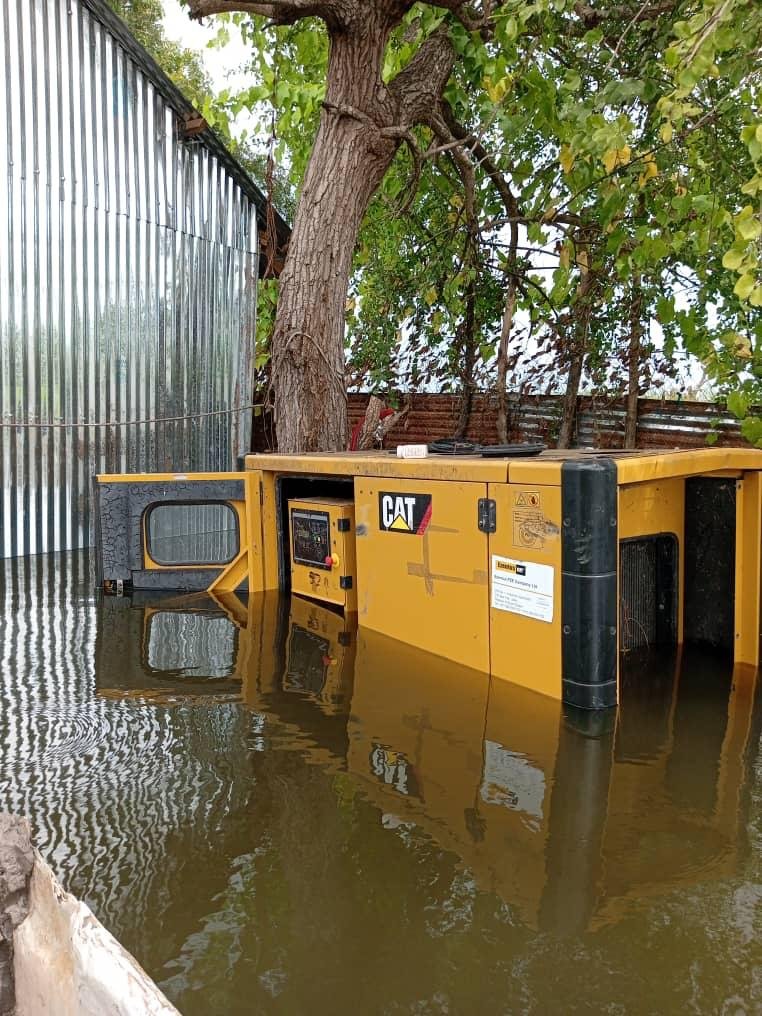
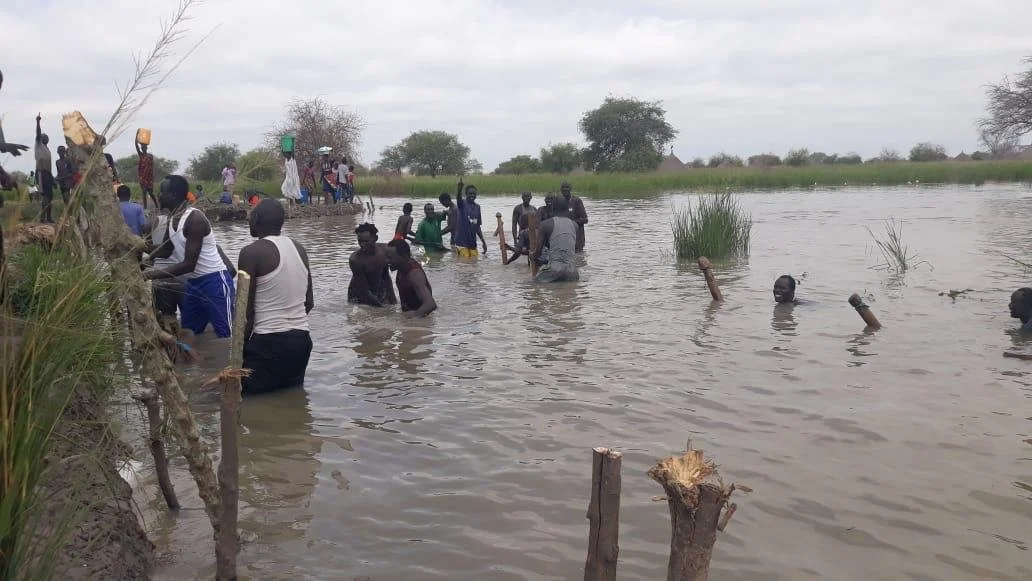
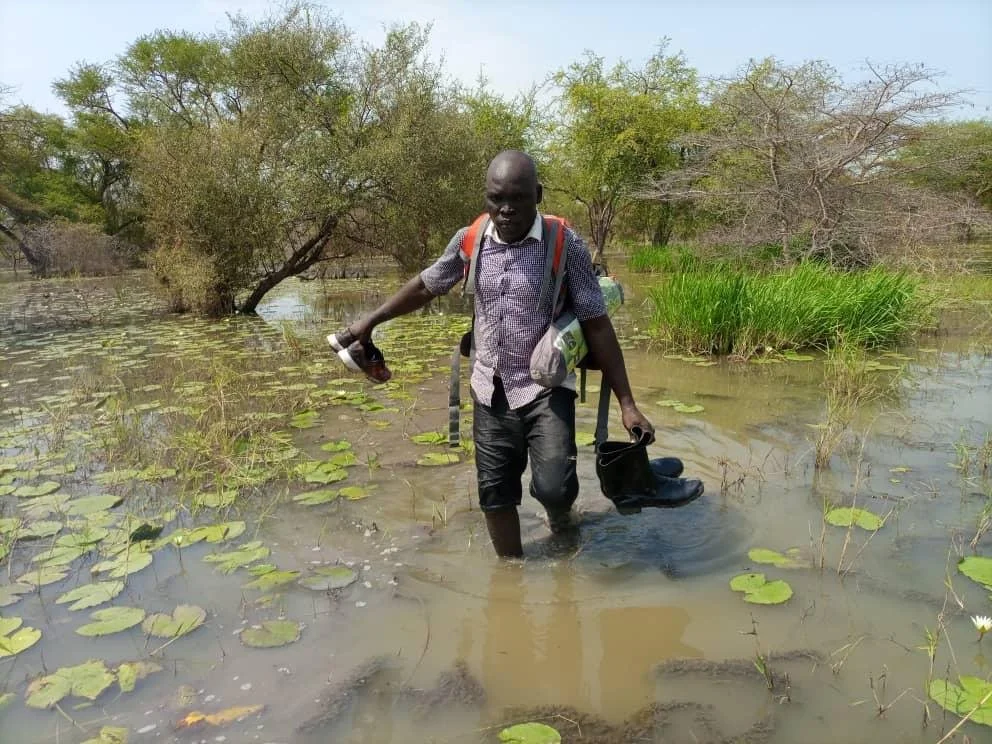
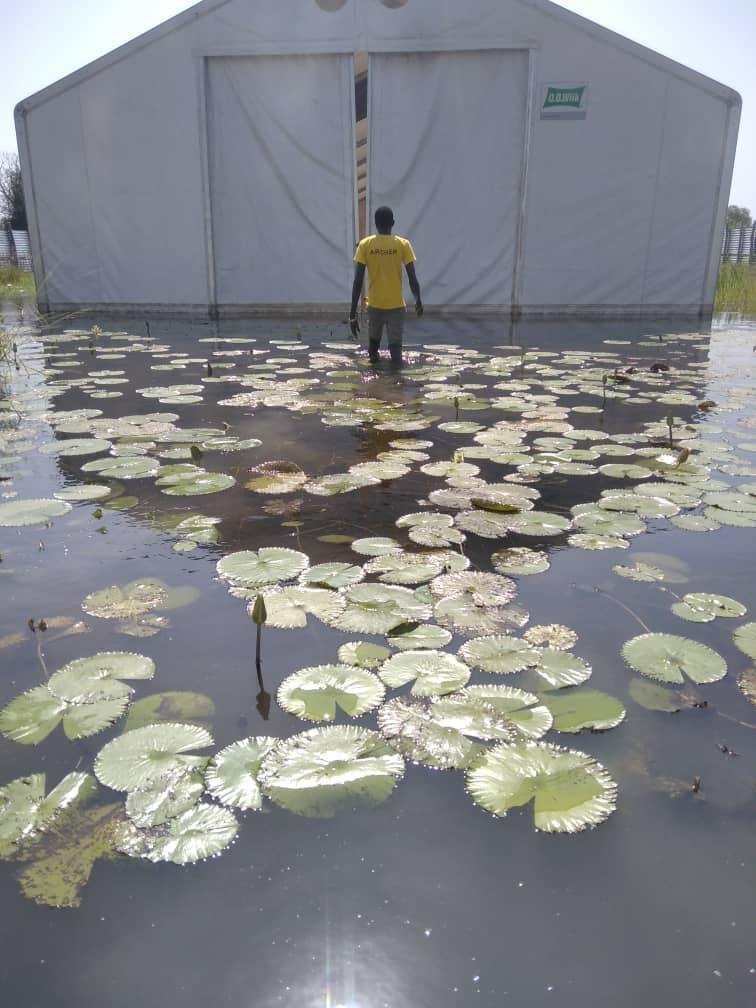
Fangak County presents extraordinary operational challenges. Every year, seasonal flooding inundates vast areas of the county, cutting off communities for months at a time and leaving many locations accessible only by boat or air. Combined with recurring conflict, limited infrastructure and significant humanitarian needs, organisations operating in Fangak must constantly adapt to rapidly changing conditions.
For security providers, these challenges cannot be addressed through traditional security measures alone. Success depends on understanding the local context, building trusted relationships and working collaboratively with communities, humanitarian partners and local authorities.
Security Through Partnership
At Archer, we view security as an enabler of humanitarian operations rather than simply a protective function.
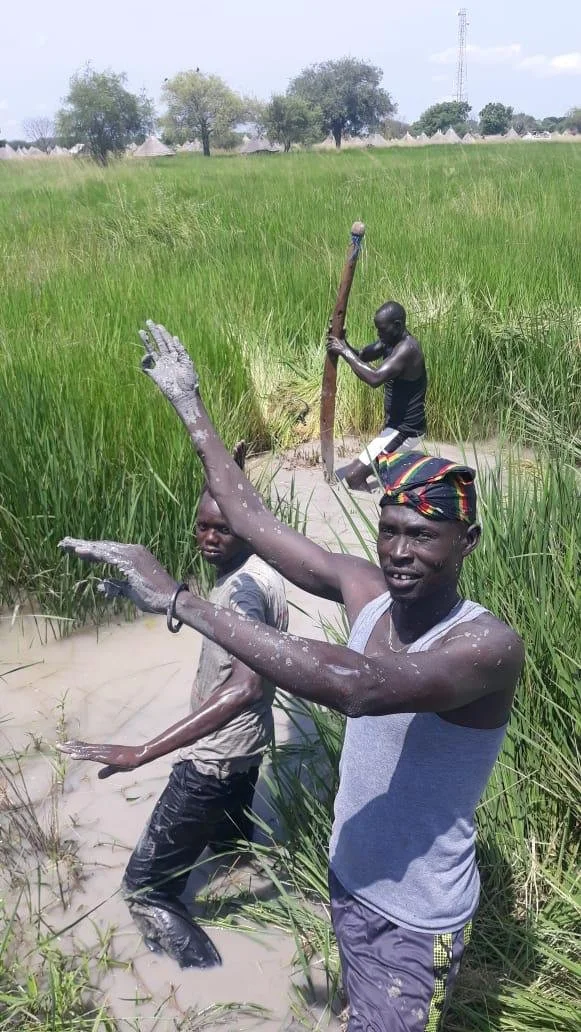
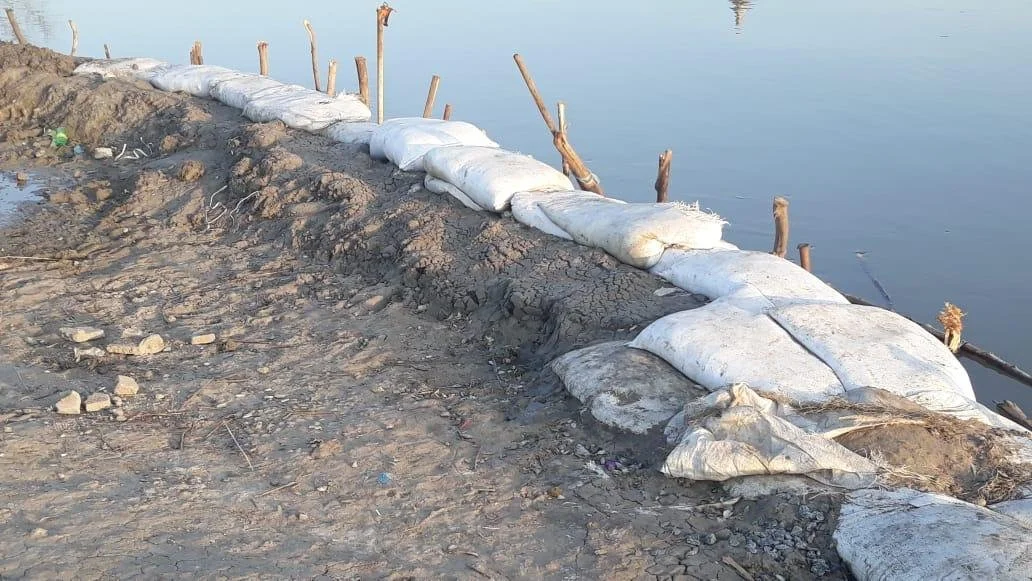
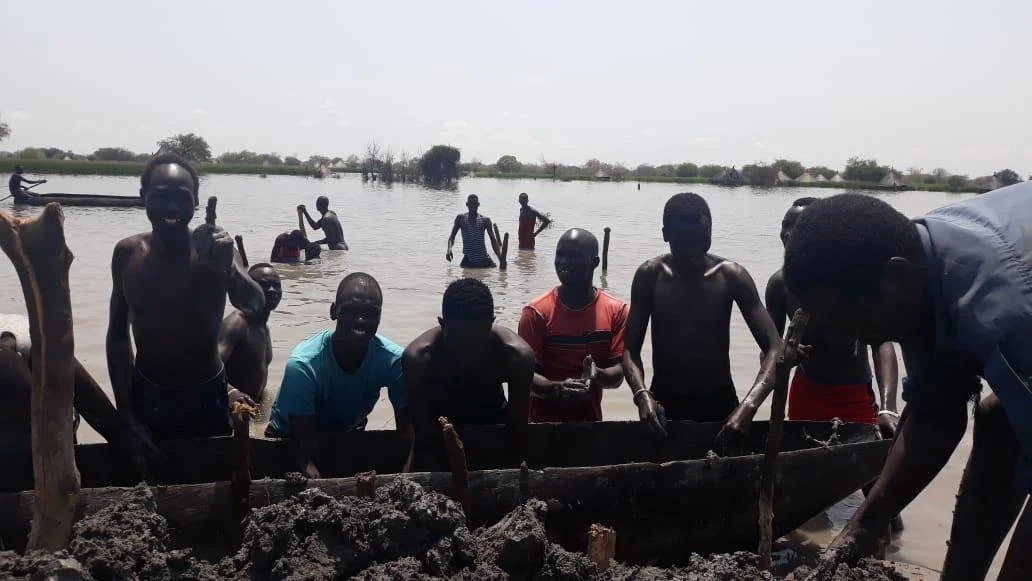
Over several years of operating in Fangak, our teams have worked alongside local communities to strengthen resilience and improve safety. This has included supporting community-led dyke construction to reduce the impact of seasonal flooding, delivering practical health and safety training, investing in local employment opportunities and adapting operational procedures to reflect the realities of the local environment.
Equally important has been our commitment to staff welfare. By ensuring our personnel are properly trained, supported and equipped to operate in demanding environments, we help create safer conditions for both our employees and the communities they serve.
This community-centred approach has enabled Archer to build long-term trust while supporting humanitarian organisations in maintaining access to vulnerable populations.
Responsible Security in Practice
As an ICoCA Certified Member, Archer is committed to the principles of the International Code of Conduct for Private Security Service Providers.
Our approach is founded on four core principles:
Respect for Human Rights – embedding human rights considerations into every aspect of our operations.
Community Engagement – recruiting locally wherever possible and building genuine partnerships with communities.
Professional Standards – investing in internationally accredited training, robust procedures and continuous improvement.
Staff Welfare – ensuring our personnel are trained, supported and able to operate safely and ethically in complex environments.
These principles are not simply policies—they guide how we deliver security every day across South Sudan.
Supporting a Just Transition
Our work in Fangak directly reflects the theme of the 2025 ICoCA Responsible Security Awards: Strategic Goal 3 – Just Transition.
A just transition recognises that sustainable development must be fair, inclusive and community-focused. For responsible security providers, this means creating decent employment opportunities, supporting local resilience, respecting human rights and ensuring that security contributes positively to long-term social and economic stability.
We are honoured that our work has been recognised as an example of these principles in action.
Field Notes from the Front Line
Alongside the case study, Archer also features in ICoCA's podcast series, Field Notes from the Front Line.
In the episode, John Davies, Director of Sustainability, Quentin Otieno, Training Manager, and Gideon Iranya, Field Operations, discuss their experiences of operating in Fangak County. The conversation explores how community engagement, human rights due diligence, local partnerships and staff welfare have shaped Archer's approach to responsible security in one of the world's most challenging environments.
The podcast offers practical insights into how responsible private security can support humanitarian operations while strengthening resilience within local communities.
Looking Ahead
Receiving the ICoCA Responsible Security Award is an important milestone for Archer International, but it also reinforces our ongoing commitment.
As security risks continue to evolve alongside climate change, conflict and humanitarian crises, we believe responsible security providers have an increasingly important role to play. By working in partnership with communities, investing in our people and upholding the highest ethical standards, we can help create safer environments that enable organisations to deliver their vital work.
We would like to thank ICoCA, the UK Foreign, Commonwealth & Development Office (FCDO), our humanitarian partners, and above all, our dedicated teams across South Sudan whose professionalism, integrity and commitment made this recognition possible.
Learn More
Read the award-winning case study:
https://icoca.ch/case-studies/building-resilience-amid-flooding-and-conflict/
Listen to the Field Notes from the Front Line podcast:
https://icoca.podbean.com/e/archer-strengthening-community-amid-flooding-and-environmental-challenges/
South Sudan - Gang Violence, Armed Youth, and Political Insecurity
The Guardian’s recent reporting sheds light on the violent rise of youth gangs in Juba, where groups such as the Toronto Boys, Mongalla Boys, Niggaz Boys, and 72 Boys dominate areas like Gudele, Sherikat, and Munuki.
These gangs, often armed with pangas and knives, are no longer fringe actors — they shape daily life in many neighbourhoods.
A viral video in July from Sherikat, which showed gang-led sexual violence, and the subsequent arrests of more than 600 young men, underscores how quickly community insecurity and state responses can escalate. Families claim many of those detained were forcibly conscripted into the army, deepening mistrust between communities and authorities.
From a security risk perspective, this environment resonates with the findings in Archer’s Weekly Strategic Summary (2–8 August 2025):
- Between January and June, 114 gun violence incidents were recorded nationwide, causing 877 deaths. Armed youth accounted for over half of these cases, highlighting their central role in driving instability.
- In Juba specifically, gang violence within IDP camps and neighbourhoods has become entrenched, exploiting weak policing and social fractures.
For organisations operating in South Sudan, particularly in the capital, this violence is not abstract. It translates into very real risks for staff and communities:
- Local employees often bear the brunt, facing attacks on their way home, sometimes robbed at knifepoint or with machetes in hand.
- Neighbourhood-based gangs know the terrain intimately, making targeted assaults and robberies both opportunistic and highly effective.
The blurred line between gang violence, armed youth, and political insecurity complicates protective measures, especially in areas like Gudele, Sherikat, and Munuki.
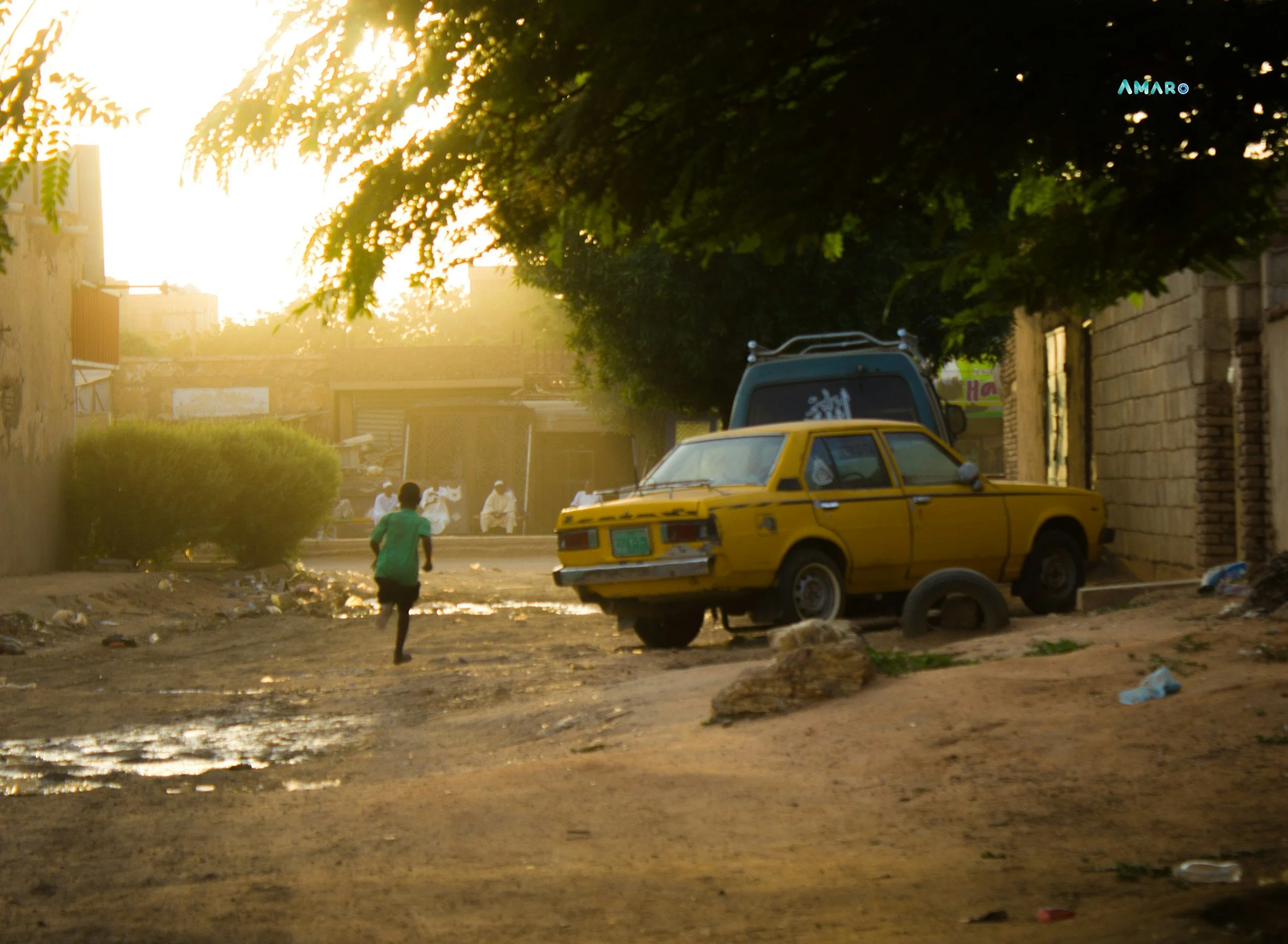
What emerges is a picture of fragility where everyday urban movement - commuting, visiting family, walking home from work - carries risk. For South Sudanese staff in particular, who live and work within these environments, the threats are not just statistics but daily realities.
https://www.theguardian.com/global-development/2025/aug/18/south-sudan-war-gang-culture-youths-conscription
South Sudan & Djibouti Sign Historic Port Deal
South Sudan and Djibouti have signed a historic agreement to develop new trade corridors linking White Nile River ports and key dry ports across South Sudan to Djibouti’s maritime infrastructure.
South Sudan and Djibouti have signed a historic agreement to develop new trade corridors linking White Nile River ports and key dry ports across South Sudan to Djibouti’s maritime infrastructure.
On paper, this could be transformative - positioning South Sudan as a logistics hub within the wider African Great Lakes Region and creating new economic lifelines beyond the traditional southern routes through the East African Community.
What is particularly striking is the ambition to prioritize corridors such as Malakal, Renk, and Nasir, threading through the Sobat basin - an area that has for much of this year been synonymous with instability, White Army mobilisations, and aerial bombardments. The contrast could not be sharper: the same terrain that has symbolised insecurity may now be reimagined as a conduit for trade and development.
The question is whether South Sudan can align its security posture with its economic aspirations. Infrastructure is only as valuable as the environment it operates in. If stability can be sustained along these critical corridors, this initiative could mark a turning point - diversifying South Sudan’s access to regional markets, embedding it more firmly in continental trade dynamics, and reducing reliance on vulnerable southern supply lines.
The stakes are clear: without credible improvements in security and governance, physical investment risks becoming stranded assets. But if South Sudan manages to seize this opportunity, the deal with Djibouti could be remembered not only as a logistics agreement, but as a bold step towards long-term development and integration.
https://www.radiotamazuj.org/en/news/article/south-sudan-djibouti-sign-deal-to-develop-trade-corridor#:~:text=South%20Sudan%20and%20Djibouti%20signed,routes%20and%20boosting%20regional%20commerce.

How We Became One of Sudan’s Trusted Cash Delivery Partners - By Saying Yes When It Mattered
We didn’t launch a cash delivery service in Sudan with a polished business plan or a strategic marketing pitch. We started because a client needed help. And we said yes.
We didn’t set out to become a cash delivery partner in Sudan. There was no formal launch or rollout plan. We got a call in 2023 from a now long-term client. Their message was clear: “We need to get cash into the country. Nothing else has worked. Can you help?”
So we did what most business leaders instinctively do — we said yes, and figured out how to make it happen later.
Two years on, we’ve built something real. We now operate what is essentially a fully functional financial logistics service in Sudan. We’re moving cash, chartering planes, coordinating secure distributions, and getting funds where they need to go, reliably and discreetly.
Turns out, it helps when you’ve spent over a decade working across the region — and when you’ve built a serious, trusted network along the way. In places like Sudan or South Sudan, operations don’t run on systems alone — they run on relationships. On trust. On knowing who to call when plans change and roads close. It’s not always about what you know — it’s often about who you know. That’s a big part of why this works.
Built From the Field, Not the Boardroom
Since that first call in 2023, we’ve gone on to support partners like Chemonics, DT Global, FEWSNET, and Concern Worldwide in delivering over $1,000,000 in cash directly to beneficiaries. We’ve operated in Khartoum, Kassala, White Nile, South Kordofan, West Kordofan, and other high-need, hard-to-access areas — navigating real-time risks, political shifts, and logistical roadblocks along the way.
None of it was straightforward. But that’s the kind of work we do best. We’re used to conflict-affected contexts. We understand how to build operations in places that don’t fit inside a clean framework. And more than anything, we understand how to get things done without overpromising or oversimplifying.
We’ve moved cash by road, air, and sometimes sheer will. We’ve worked with local leaders and security forces to ensure safe passage. We’ve brought structure to environments where there’s no SOP to lean on — only experience, instinct, and resilience.
When There’s No Playbook, You Build One
There’s no template for this. No step-by-step guide to delivering cash in war-affected or politically sensitive areas. What there is, however, are fundamentals: stay close to your client, stay flexible, and don’t lose sight of the mission.
We didn’t get into this because it looked easy or profitable. We got into it because someone we trusted needed help. And we realized quickly that we were uniquely placed to deliver — not just because of our logistics capabilities, but because of the relationships we’ve built, the trust we’ve earned, and the years we’ve spent working in these environments.
That’s why this isn’t just a “service line.” It’s something we believe in. It’s something we’re good at because we’ve lived it. And honestly, it’s why we’re here.
The Work We Love
There’s a particular energy to this kind of work. You never really know what’s coming. But there’s nothing more satisfying than looking at a messy, difficult, high-stakes situation and thinking: Can I actually pull this off? And then doing it.
We love that. The uncertainty. The pressure. The problem-solving. The moments that make you feel like you’re part of something that matters.
We’re not in it for the headlines. We’re in it for the results. The relationships. The quiet confidence that comes from knowing your team, your approach, and your principles can stand up in the toughest conditions.
What We’re Doing Now
Today, we’re not just delivering cash. We’ve expanded into full-spectrum humanitarian logistics — helping partners move non-food items, medical supplies, fuel, and critical equipment across Sudan.
We do it all while staying compliant, responsive, and grounded in the realities on the ground. And we’ll keep going — because this work matters, and because we’ve proven we can do it well.
So if you’re navigating complex programs in fragile settings — and you need a partner who knows how to move, solve, and deliver — give us a call. We’re here. We’ve been here. And we know what it takes to make things happen.

Extra! Extra! Read All About It!
"We are thrilled to introduce our latest innovation – a comprehensive logistics solution tailored to meet the unique challenges of South Sudan. With our new fleet of planes and river barges, coupled with state-of-the-art tracking systems and professionally trained staff, we are poised to revolutionize the transportation landscape, ensuring secure, efficient, and reliable logistics services for our clients."
⭐ NEWSFLASH - Extra! Extra! Read All About It!⭐
Welcome to Archer, your trusted partner in secure logistics solutions tailored for South Sudan's unique landscape. Archer is thrilled to announce a significant expansion to our logistics capabilities with the introduction of brand new river barges to complement our existing air fleet. With over 20 years of unparalleled experience in the region, we are proud to introduce our latest offering: a comprehensive transportation service designed to meet the diverse needs of clients spanning the private sector, diplomatic community, and international NGOs.
Jonathan Simpson, Managing Director of Archer International:
"We are thrilled to introduce our latest innovation – a comprehensive logistics solution tailored to meet the unique challenges of South Sudan. With our new fleet of planes and river barges, coupled with state-of-the-art tracking systems and professionally trained staff, we are poised to revolutionize the transportation landscape, ensuring secure, efficient, and reliable logistics services for our clients."
At Archer, we understand the challenges of navigating South Sudan's terrain. We have a versatile fleet of planes, river barges, and trucks, ensuring efficient and secure transport of your cargo across the country. Our state-of-the-art tracking system provides real-time oversight, offering peace of mind from Juba to your final destination.
Committed to excellence, we maintain rigorous recruitment standards, assembling a team of experienced and vetted professionals dedicated to safeguarding your cargo every step of the way. With our extensive network spanning the country, we guarantee seamless access and expedited delivery, ensuring your cargo reaches its destination swiftly and hassle-free.
Experience the difference with Archer – where security, reliability, and efficiency converge to redefine logistics in South Sudan.
Contact us today to learn more about how we can meet your transportation needs with precision and professionalism.

🎉🌟 Celebrating Success: Congratulations to Our Archer Team! 🌟🎉
We're thrilled to announce the outstanding achievement of our 14 Archer staff members who successfully completed the rigorous Mobile Security Response Training! 🙌
With the expansion of our services across Juba, it's imperative to ensure our clients receive the utmost safety and security. That's why we've invested in additional resources, including a new vehicle and team, to bolster our support system.
We're thrilled to announce the outstanding achievement of our 14 Archer staff members who successfully completed the rigorous Mobile Security Response Training! 🙌
With the expansion of our services across Juba, it's imperative to ensure our clients receive the utmost safety and security. That's why we've invested in additional resources, including a new vehicle and team, to bolster our support system.
At Archer, we pride ourselves on adhering to the highest standards. Our training syllabus is meticulously crafted to meet the requirements of industry benchmarks such as ICoCA, PSC1, and ISO 18788. But what truly sets us apart is our unwavering commitment to human rights. Our training program places an unprecedented focus on crucial aspects like Gender-Based Violence, Protection from Sexual Exploitation and Abuse, ensuring that every member of our team is equipped to handle sensitive situations with utmost care and respect.
The Mobile Response Team (MRT) plays a pivotal role in our commitment to keeping you safe. Day or night, they're ready to respond swiftly to any emergency our clients may face. From first aid to firefighting, from managing crime scenes to resolving conflicts, our MRT members undergo rigorous training to handle any challenge with expertise and precision.
We're immensely proud of our entire team, but we must give a special shoutout to Abraham Makuei Mayek for his exceptional performance, scoring an impressive 93% in the exam! 🌟
Join us in applauding the dedication and hard work of our Archer team members. Your safety is our top priority, and we're committed to delivering excellence every step of the way. Here's to continued success and keeping our community safe! 💪🚀 #ArcherTeam #SafetyFirst #Congratulations

Security Officers - Your Shop Window
In the challenging environments of Central Africa labeled as 'complex' or 'post-conflict,' the initial impression set by security personnel at NGO compounds can significantly impact vital funding and organizational reputation. Unfortunately, encounters with lethargic or unfriendly guards are all too common, reflecting a pervasive problem with the demeanor of security officers. At Archer International, we firmly believe that security providers can enhance an organization's image by employing smart, polite, and friendly officers who embody its values. By prioritizing professionalism and training, we aim to transform perceptions of the security industry and project positive outcomes. As an Affiliate of the International Code of Conduct for private security providers (ICoCA), we are committed to upholding best practices and human rights standards, ensuring that our workforce reflects the ethos of the organizations we serve.
Picture if you will this scenario: Your senior donor arrives at your compound somewhere in Central Africa, for a key meeting to assess the efficacy of your delivery programmes, and you are out to impress. She arrives in the midday heat at the main gate and is met by a suspicious looking security guard wearing flip flops and a frown. After giving her name, the guard disappears for several minutes before lethargically opening the side door and beckons her into a scruffy guard room where she is made to fill in a visitors’ book. Phone calls are made. You can’t be reached, and eventually she calls you on her cell in frustration to say she has arrived and is keen to get the meeting underway...
Sound familiar? Do you imagine the right tone has been set to press for that vital funding?
Sadly this is all too familiar when operating countries blessed with the tags ‘complex’, ‘chaotic’, or ‘post-conflict’ environments. Organizations are often too ready to accept the prevalent norm of standards, rather than insisting on better. There is currently an almost universal problem with the general demeanor of security officers, and one that fails to reflect the positive goals and outlook of the NGOs, their mission and values. The person at the main gate is the first a visitor meets, and sets the tone from the onset. This is frequently overlooked when selecting a security provider, which is often considered a grudge purchase; an unpalatable necessity.
At Archer International, we argue and firmly believe that security service providers can add real value to an organization by providing a shop window for the way you position and operate. Smart, polite and friendly security officers (for let us give them a title that reflects their status and responsibility) overtly reflect your organization. Your visitors will immediately feel welcome and secure, and treated with dignity, whether they be senior donors or people seeking employment. Similarly we are acutely sensitive to your staff, whom the security officers are also there to protect and patrol compounds by day, and more importantly residences at night. There is an intimacy here that needs to be acknowledged. Your security officers control access to your compound at night and are often entrusted with keys in the event of emergencies. Consequently clients need to rely on security officers who are highly trained, vetted, trusted, and who project both a friendly and reassuring aspect.
Every day Archer International aims to change general impressions of the security service industry to those of proactive and positive outcomes. On the ground we achieve this by developing a highly motivated workforce, through training, mentorship, and professional development. A motivated, well-adjusted security officer is the person who can project your own organization’s ethos, beliefs and values on to the outside world. Archer is an Affiliate of the International Code of Conduct for private security providers (ICoCA) that strives for best practice within the industry, with a particular emphasis on human rights.
John Davies
Director
Archer International Ltd