

Beyond HEAT: Rethinking Safety and Security Training for National Staff in South Sudan
Every year, humanitarian organisations invest considerable time and resources in preparing international staff to work in complex environments. HEAT courses, pre-deployment briefings, security inductions and journey management procedures are all well-established parts of responsible security management. In South Sudan, where organisations operate across an exceptionally varied and often difficult security environment, that preparation is essential.
There is, however, an opportunity to think more broadly about how we prepare national staff for the risks they encounter. South Sudanese colleagues are the backbone of humanitarian operations across the country. They are often the people travelling most frequently to project locations, managing distributions, engaging with communities and authorities, maintaining field offices and continuing programmes through periods when international movement may be restricted.
Their exposure to risk can also look quite different. For national staff, personal security does not begin when they arrive at the office and end when they leave it. The journey home, the security of their house or compound, their visibility within their own community and the routes they travel outside working hours can all form part of their wider risk environment. This creates an important question for organisations working in South Sudan: does the security preparation we provide reflect the reality of how our national colleagues live and work?
Moving beyond a standard security course
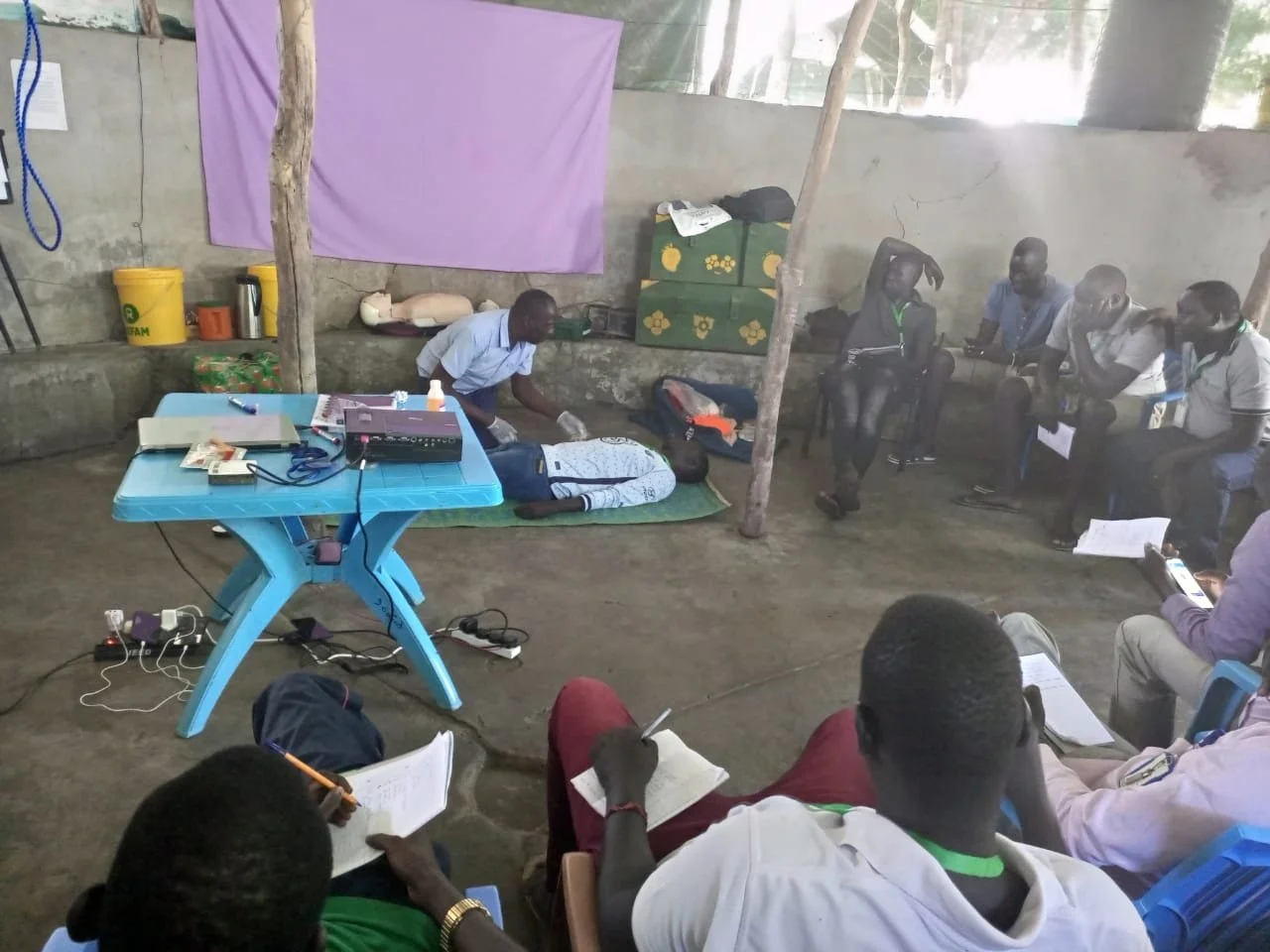
This was the thinking behind Archer's Personal Safety & Security Training programme for national staff in South Sudan. It was not developed as a replacement for HEAT, nor as a simplified version of a course designed for international personnel. It was developed around a different starting point: understanding the practical risks national colleagues face and giving them useful tools for managing those risks.
That distinction matters. A member of staff travelling home through Juba in the evening may need to think about route variation, situational awareness and what to do if they believe they are being followed. Someone regularly travelling through field locations may need greater confidence in checkpoint behaviour, negotiation and communications. Staff living in residential compounds may benefit from understanding relatively simple measures that can improve security at home, as well as knowing what to do during a compound intrusion or when gunfire occurs nearby.
The objective is not to make employees responsible for managing risks that properly sit with their organisation. Duty of care remains an organisational responsibility, supported by appropriate security management, procedures, information and resources. Training complements those systems by giving staff the knowledge and confidence to make better decisions when they are the person actually facing the situation.
South Sudan cannot be treated as one security environment
One of the most important principles behind effective security training in South Sudan is recognising how significantly the operating environment changes from one location to another. A generic national security briefing can provide a useful baseline, but it cannot fully prepare someone for the particular dynamics they may encounter in their own location.
Yei is a good example. When preparing personnel who travel in and around Yei and parts of Central Equatoria, kidnapping and abduction may form part of the risk discussion. That does not mean kidnapping should automatically be given the same prominence in training delivered elsewhere in South Sudan. In another location, road ambushes, communal conflict, armed robbery, cattle-related violence, UXO, civil unrest or compound intrusion may be considerably more relevant.
The same principle applies at a much more detailed level. Checkpoints exist throughout South Sudan, but the nature of those checkpoints, the actors involved and the way an organisation expects its personnel to respond can vary. A team regularly conducting road movements needs to understand not only general checkpoint principles but the situations it is reasonably likely to encounter on its actual routes.
Good security awareness training therefore needs both consistency and flexibility. There are core principles that apply everywhere, but those principles become considerably more useful when they are connected to local circumstances.
What we have learned from delivering training in the field
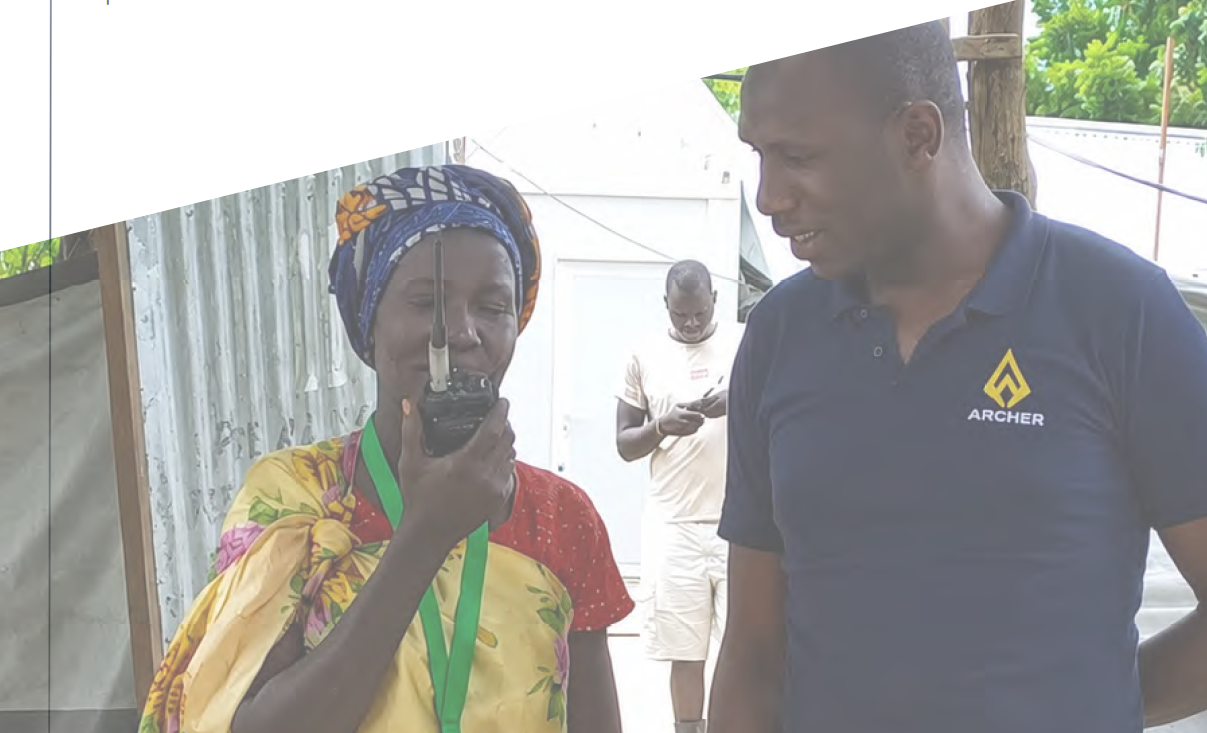
Our experience delivering safety and security training for humanitarian organisations across South Sudan has reinforced the value of this approach.
In Lankien, Archer supported Oxfam with safety and security training connected to field operations, including food distribution activities. The security considerations surrounding a distribution are particular to that activity. Staff need to understand crowd dynamics, access and exit routes, communications, community engagement and the early indicators that a situation may be changing. Training becomes more valuable when those issues are discussed in relation to the distributions staff are actually supporting rather than as abstract scenarios.
In Pibor, our training has included a particular focus on compound intrusion and how staff should respond. Here, the value lies in moving beyond the identification of compound intrusion as a threat and working through the response itself: where staff should move, how information is communicated, when assistance is requested and how individual actions can either reduce or inadvertently increase the risk during an already difficult situation.
Our work with Caritas Austria in Yambio took a different approach again. The security workshop combined familiarisation with Caritas' own security SOPs with broader security awareness training. Staff considered threats, vulnerabilities and risk; personal safety at home and in the office; journey management; and appropriate conduct at security checkpoints. The programme also incorporated practical fire safety and Basic First Aid, including scene assessment, treatment priorities and responses to bleeding, burns, fractures and cardiac emergencies.
These examples are different because the organisations, activities and locations were different. That is precisely the point. Effective training should have enough structure to provide a consistent standard while remaining flexible enough to address the circumstances in which people actually operate.
Making security training relevant to the individual
There is another dimension that is sometimes overlooked. Location is only one part of the risk picture; people's roles matter too.
A driver travelling several hours each day may need a greater emphasis on journey management, vehicle safety, checkpoints and what to do following an incident on the road. A programme team supporting distributions may need more discussion around crowds, community tensions and maintaining situational awareness while focused on programme delivery. Staff working predominantly from an office may benefit more from compound security, fire safety, emergency procedures and personal security during their journey to and from work.
This is why we believe bespoke security training should begin with a conversation about the organisation. We want to understand where staff are working, what they are doing, what incidents or near misses the organisation has experienced, what concerns staff themselves have raised and what security procedures are already in place. Where appropriate, an organisation's own SOPs and security plans can then be incorporated into the course.
This also avoids creating a parallel security system in the classroom. Training should reinforce an organisation's existing security management arrangements, not inadvertently introduce procedures that contradict them.
The value of taking training out of Juba
There are clear practical advantages to delivering training in Juba, particularly where organisations want to bring together staff from several locations. Archer can deliver the Personal Safety & Security course in Juba in English or Arabic and tailor it to the roles and locations represented in the room.
There is also considerable value in taking safety and security training into field locations. When training is delivered in Yei, Pibor, Yambio, Lankien, Bentiu, Malakal or another operational location, the surrounding environment itself becomes part of the learning.
A checkpoint exercise can be discussed in the context of checkpoints staff regularly encounter. A compound-security session can consider the actual layout and vulnerabilities of the facility in which people work. Journey management can be related to real routes and realistic alternatives. Staff can discuss incidents and near misses that have occurred locally and consider what can be learned from them.
This makes security training less theoretical and allows participants to connect broader security principles with their own experience and local knowledge. Importantly, it also recognises that national staff are not passive recipients of security information. They often have an exceptionally detailed understanding of their operating environment. Effective training creates space for that knowledge to form part of the discussion.
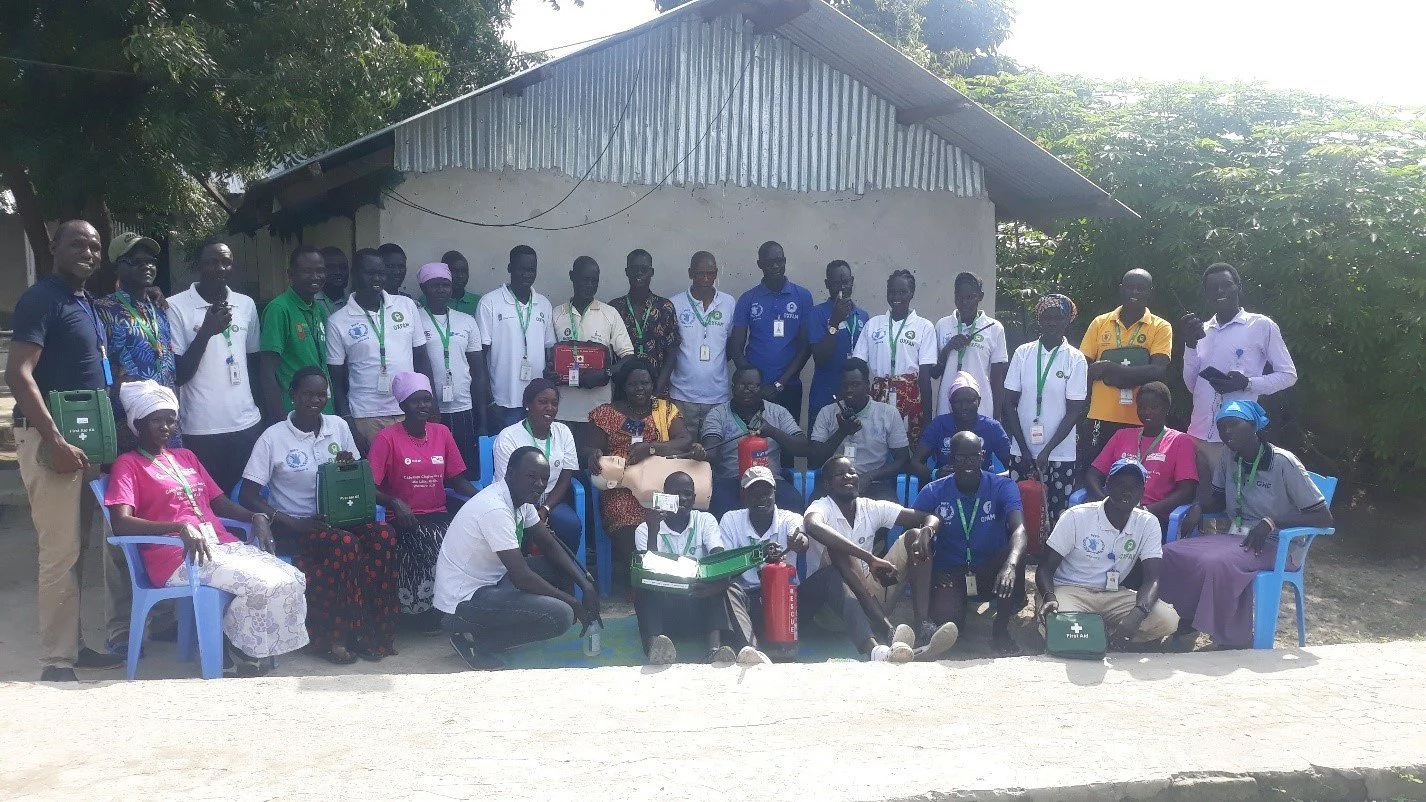
Security & Safety at GDF sites in Lankien for Oxfam
Practical capability matters
Security awareness is only part of preparedness. Our Personal Safety & Security course can include situational awareness, risk mitigation, journey management, vehicle and road safety, checkpoint behaviour and negotiation, UXO and mine awareness, residential and compound security, communications, incident reporting, human rights and PSEA, and emergency decision-making.
We also place considerable emphasis on practical First Aid and Fire Fighting training. These are skills that can benefit staff professionally and personally. Understanding how to assess a casualty, control serious bleeding or respond appropriately to a fire provides a practical capability that extends well beyond a security classroom.
This combination of awareness and practical skills is important. The purpose of training should not simply be to demonstrate that a topic has been covered or that staff have attended a course. The more useful measure is whether people leave better able to recognise a developing problem, understand the options available to them and respond appropriately under pressure.
Broadening the conversation around duty of care
The humanitarian sector in South Sudan already invests significantly in staff safety and has developed sophisticated approaches to security management in an extremely challenging environment. The opportunity is not to replace those systems, but to continue broadening the conversation about who receives structured security preparation and what that preparation should look like.
National staff bring enormous contextual knowledge to humanitarian operations. They understand communities, languages, relationships and local dynamics in ways that cannot be replicated through a briefing. At the same time, familiarity with an environment should not be confused with immunity from its risks. Local knowledge and structured security preparation should complement one another.
As we mark World Humanitarian Day, this is worth reflecting on. If national colleagues are routinely travelling into the field, passing through checkpoints, supporting distributions, working in remote communities and responding when programmes face disruption, investing in their personal safety and preparedness should be considered an integral part of organisational duty of care.
To mark World Humanitarian Day, Archer is offering 10% off our Personal Safety & Security Training for national staff in South Sudan. Courses can be delivered in English or Arabic, either in Juba or in field locations across South Sudan, and can be adapted to an organisation's existing SOPs, operating locations, staff roles and specific risk environment.
For us, the principle is straightforward: good security training should reflect the people receiving it, the work they do and the places in which they actually operate.